Skip to content


Medically Reviewed by:
Michael Scott Liebenstein, Ph.D, BCB
Read more

What Is Dialectical Behavior Therapy?
How DBT Works
Individual Therapy and Skills Groups
Practicing DBT Skills Between Sessions
DBT Focuses on Building Missing Skills
Expert Insights
DBT Works Best When You Use Skills Before a Crisis, Not Only During One
- A very practical mistake people make is waiting until emotions are already at their highest point before trying to use DBT skills.
- By then, the mind is flooded, the body is reactive, and it becomes much harder to think clearly. DBT becomes far more useful when the skills are practiced earlier and more consistently.
- That may mean using mindfulness when irritation first starts building, using distress tolerance before the urge to shut down or lash out gets stronger, or using interpersonal effectiveness before resentment turns into conflict.
- In real life, this is what helps DBT become usable instead of theoretical. A person who practices one grounding strategy daily is usually more able to access it in a difficult moment.
- A person who rehearses boundary-setting language ahead of time is more likely to use it during a tense conversation.
- The benefit of DBT is not just knowing the skill names. It is building enough repetition that the skill shows up when you actually need it.
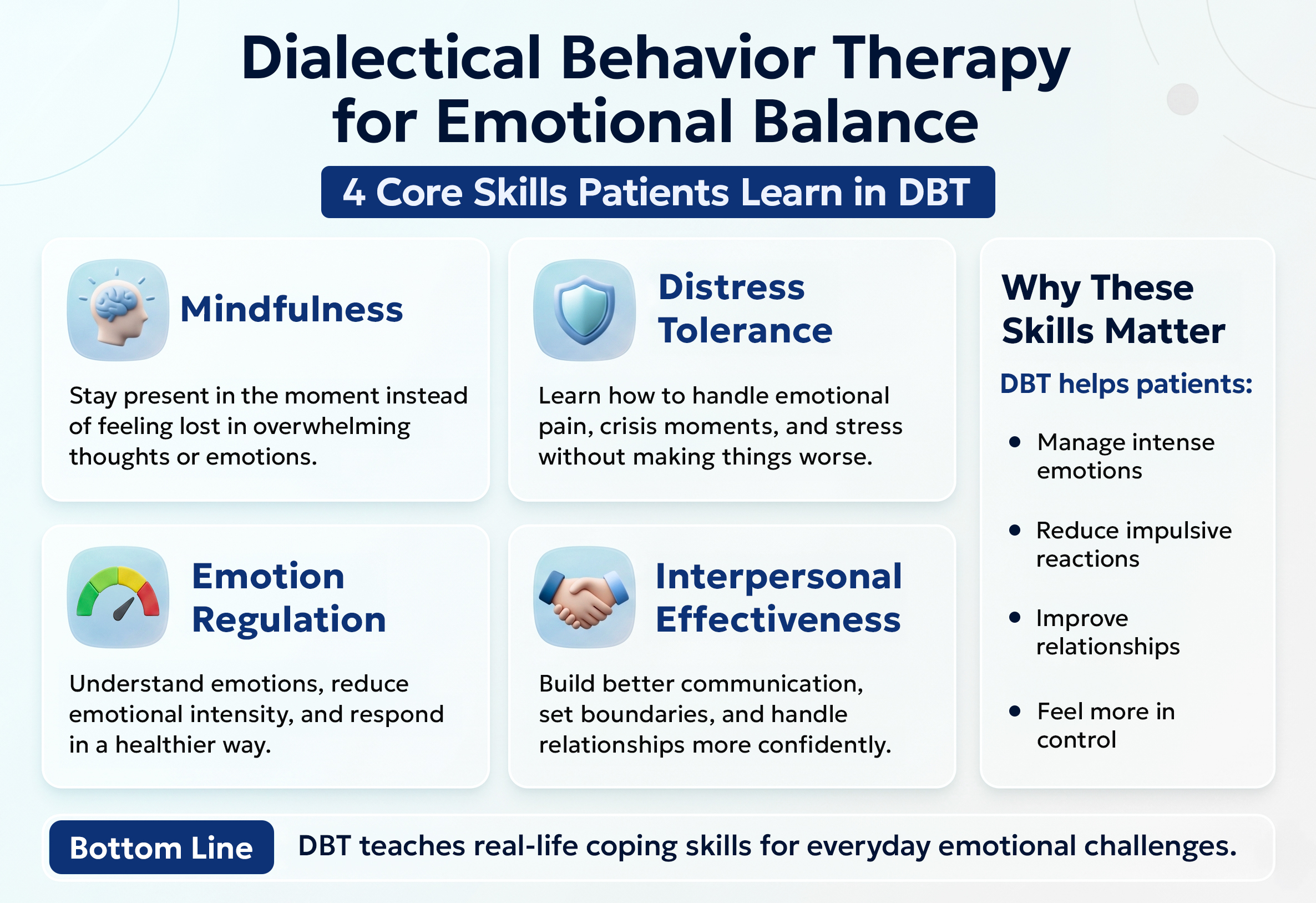
The Four Core DBT Skills
Mindfulness:
Distress Tolerance:
Emotion Regulation:
Interpersonal Effectiveness:
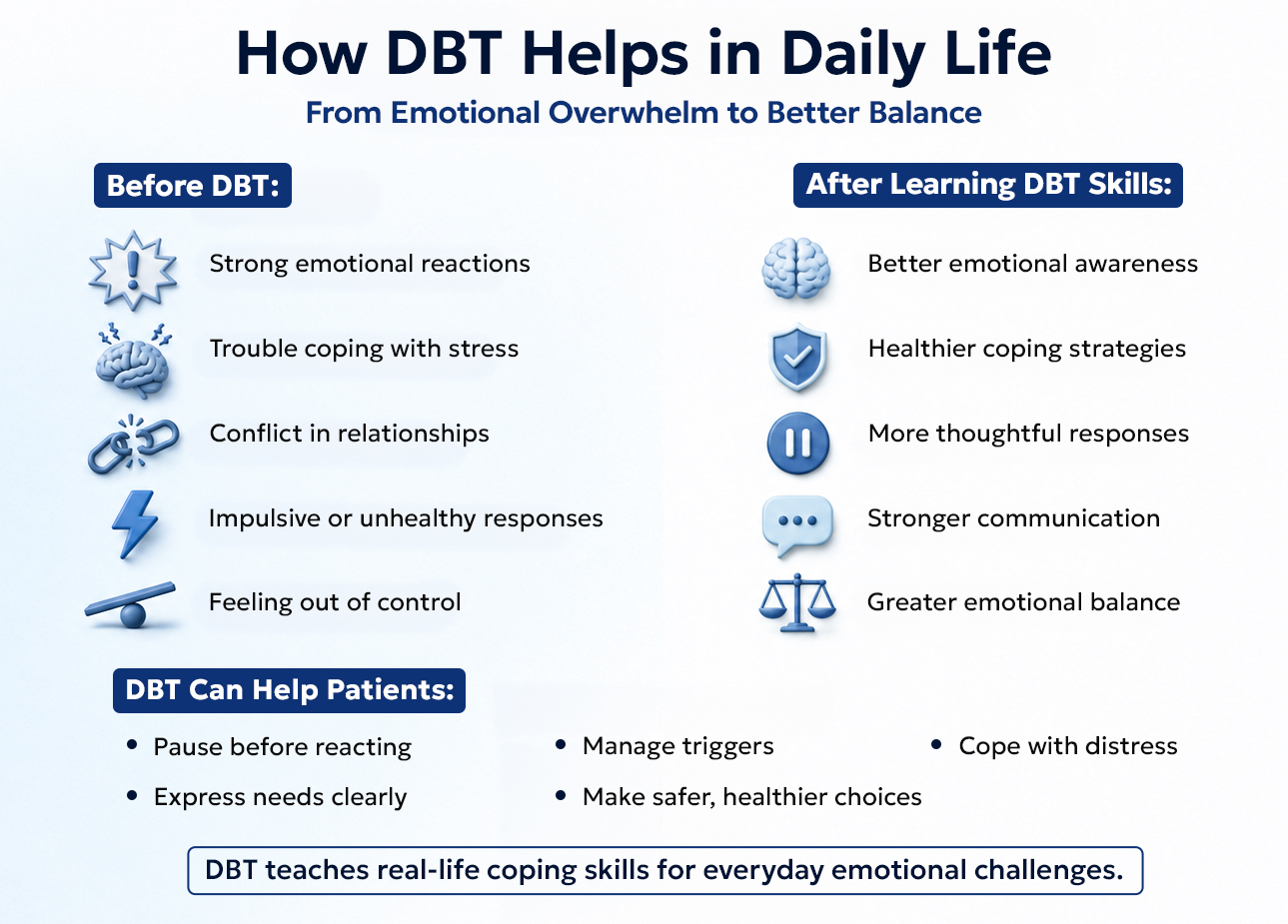
Feeling overwhelmed by your emotions? DBT can help you respond, not react
What Conditions Can DBT Help Treat?
DBT may be Helpful for Patients Searching for these Conditions
- Dialectical behavior therapy for anxiety
- Dialectical behavior therapy for depression
- Dialectical behavior therapy for PTSD
- Dialectical behavior therapy for borderline
What to Expect in DBT
You do not have to keep fighting your emotions alone.
Dialectical Behavior Therapy vs CBT
When to Seek Professional Support for DBT
Expert Insights
The Most Valuable DBT Progress Often Looks Small at First
- Many people expect therapy progress to feel dramatic. With DBT, progress is often quieter, but clinically very meaningful.
- It may look like pausing before sending an angry message. It may look like staying present during distress instead of escaping into harmful coping.
- It may look like recognizing a trigger earlier, asking for what you need more clearly, or getting through a difficult day without a crisis.
- These changes matter because they reduce damage over time. DBT is built around helping people create a life that feels more manageable, more stable, and more worth living.
- That usually happens through repeated small wins, not instant transformation. When patients understand this early, they are less likely to get discouraged and more likely to stay committed long enough to see real gains in emotional balance, relationships, and daily functioning.
Why Choose AZZ Medical Associates for DBT Treatment
- All insurance accepted
- No wait time in appointments
- HIPAA-secure telehealth
- Same-day/next-day appointments
- Walk-in appointments
- Medication management
- Structured follow-ups
- Evidence-based DBT
- Clear communication
- DBT skills training
- Emotional regulation support
- Distress tolerance coaching
- Relationship and communication skills
- Real-life coping strategies
When emotions feel too heavy, the right skills can change everything.
FAQs
What is Dialectical Behavior Therapy, or DBT?
Dialectical Behavior Therapy, or DBT, is a structured form of therapy that helps people manage intense emotions, reduce harmful reactions, and build healthier coping skills. It focuses on four main skill areas: mindfulness, distress tolerance, emotion regulation, and interpersonal effectiveness.
Who can benefit from DBT?
DBT may help people who struggle with emotional outbursts, impulsive behavior, relationship conflict, self-destructive patterns, anxiety, depression, trauma-related distress, or mood instability. It is often useful for patients who feel emotions very strongly and need practical tools to respond in healthier ways.
Is DBT only for borderline personality disorder?
No. DBT was originally developed for people with borderline personality disorder, but it is now also used for other mental health concerns involving intense emotions, distress, impulsivity, or relationship difficulties. Patients do not need a specific diagnosis to benefit from DBT-informed skills.
What happens during DBT treatment?
DBT usually includes structured therapy sessions where patients learn coping skills, talk through real-life situations, and practice new ways to manage emotions and relationships. Patients may also use tracking tools, such as diary cards or worksheets, to notice triggers, urges, emotional patterns, and progress between sessions.
Does AZZ offer DBT for Patients?
AZZ Medical Associates provides healthcare services in New Jersey, including primary care, psychiatry, behavioral health, and HIPAA-compliant telehealth. The site highlights an integrated approach that supports both mental and physical health, which can be helpful for patients who need coordinated care.
Can DBT be combined with medication management?
Yes. Some patients benefit from therapy, medication management, or both, depending on their symptoms and diagnosis. DBT teaches coping and emotional regulation skills, while psychiatric care may help manage symptoms such as depression, anxiety, mood instability, or other mental health conditions when medication is clinically appropriate.
How to schedule an appointment with AZZ Medical Associates?
Patients can contact AZZ Medical Associates to ask about behavioral health appointments, telehealth options, insurance, and availability. Our human support team will guide you throughout the process.