


Exposure therapy is a structured, evidence-based treatment that helps people face difficult situations. They can also learn to cope with thoughts, objects, memories, or bodily sensations they fear, rather than avoid them.
Considered an effective treatment option for:
- Phobias
- Panic disorder
- Social anxiety disorder
- Obsessive-compulsive disorder
- Generalized anxiety disorder
- Post-traumatic stress disorder
Builds emotional tolerance over time
Supports a more realistic sense of safety
Exposure-based therapy is designed to interrupt that pattern in a careful, clinically guided way.
What Is Exposure Therapy?
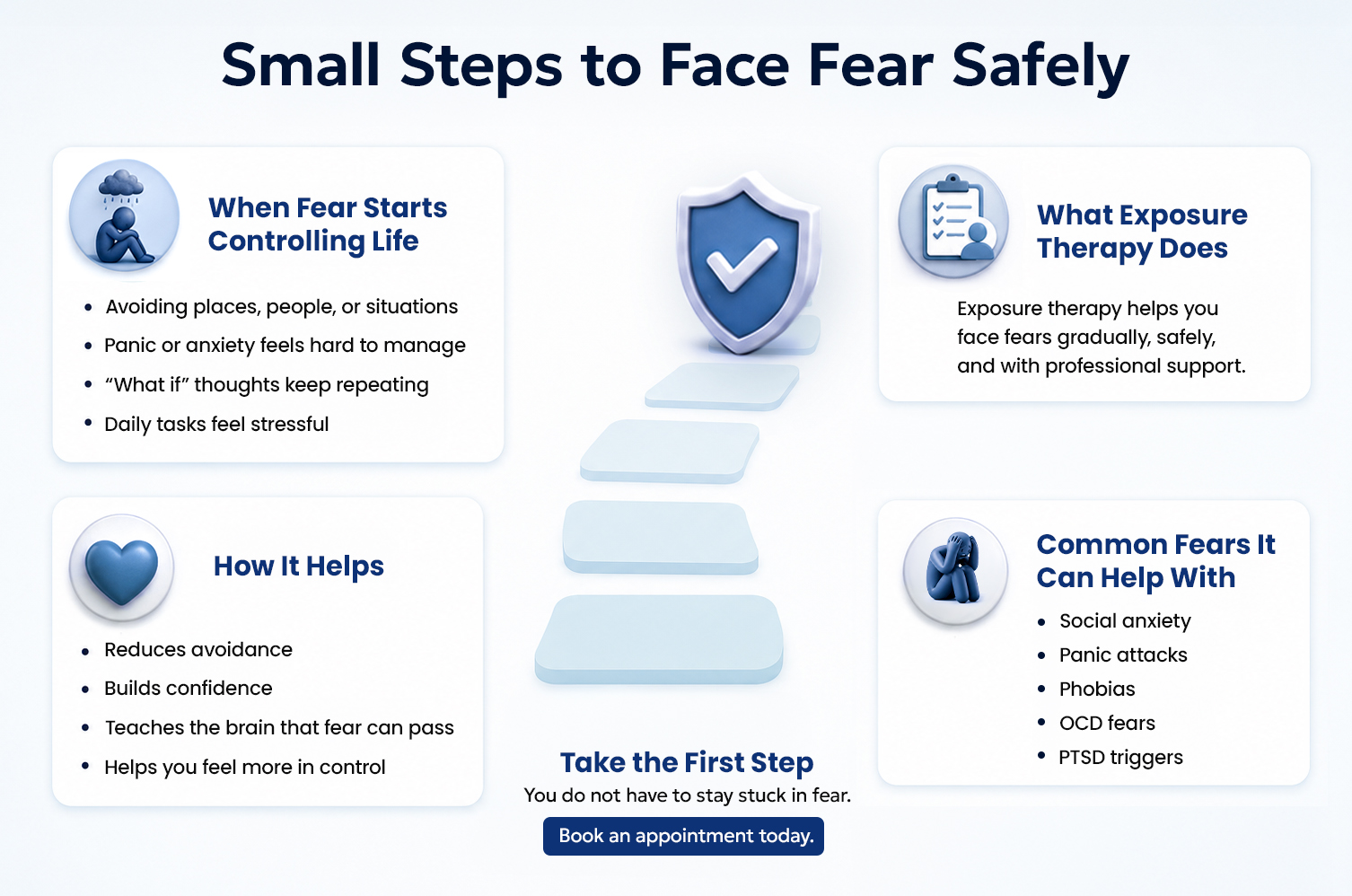
- Anxiety often teaches people to avoid feared situations or experiences
- People with social anxiety may avoid speaking in meetings or social settings
- People with panic disorder may avoid exercise because physical symptoms feel dangerous
- People with OCD may avoid triggers or rely heavily on rituals for relief
- People with PTSD may avoid reminders connected to traumatic experiences
- Avoidance may reduce distress temporarily in the short term
- Long-term avoidance can reinforce fear and increase anxiety over time
- It can strengthen the belief that situations are dangerous or impossible to manage
- Exposure therapy is designed to help break and reverse this avoidance pattern
Fear Shouldn’t Control Your Daily Life
How Exposure Therapy Works
Note: This authentic blog only serves educational purposes and should not be considered as medical advice.
Expert Insights
Why Avoidance Keeps Anxiety Alive
- A common misunderstanding is that anxiety stays strong because the feared thing is powerful.
- In many cases, anxiety stays strong because avoidance never allows the brain to update its assumptions.
- If a patient always leaves the room, cancels the plan, checks the body sensation, or performs the ritual, the brain never learns that the feared outcome may not happen, or that it can be tolerated if distress shows up.
- This is why exposure therapy is so practical. It does not argue with fear only in theory.
- It creates experiences that challenge fear directly. For many patients, that is the difference between knowing something intellectually and actually believing it in daily life.
Key Reasons Why Exposure Therapy Works So Well
That is one reason repetition matters so much. A single exposure can help, but a pattern of exposure is what produces durable change.
Types of Exposure Therapy
There are also different pacing strategies:
- Graded exposure therapy starts with easier items and gradually moves up.
- Flooding therapy starts with the most intense exposure first.
- Systematic desensitization combines exposure with relaxation strategies.
- Prolonged exposure therapy is a trauma-focused form commonly used for PTSD.
Note: This authentic blog only serves educational purposes and should not be considered as medical advice.
Expert Insights
How to Use a Fear Hierarchy Correctly
- A fear hierarchy is one of the most useful exposure therapy tools when built well.
- The mistake many people make is either starting too high and getting overwhelmed, or staying too low and never progressing.
- A better approach is to choose steps that are hard enough to activate anxiety but still realistic enough to complete repeatedly.
- Moderate-level starting points often work better than jumping straight into the hardest item.
- Another practical point: remove as many unnecessary safety behaviors as you can.
- If the exposure is “go to the store,” but the person only goes with constant reassurance, escape planning, or checking, the brain may learn the wrong lesson.
- The more directly the person faces the feared situation, the more durable the learning tends to be.
What Conditions Can Exposure Therapy Help Treat?
ERP For OCD Treatment
ERP for Prolonged Exposure Therapy
You Don’t Have to Face Anxiety Alone
What to Expect During Treatment
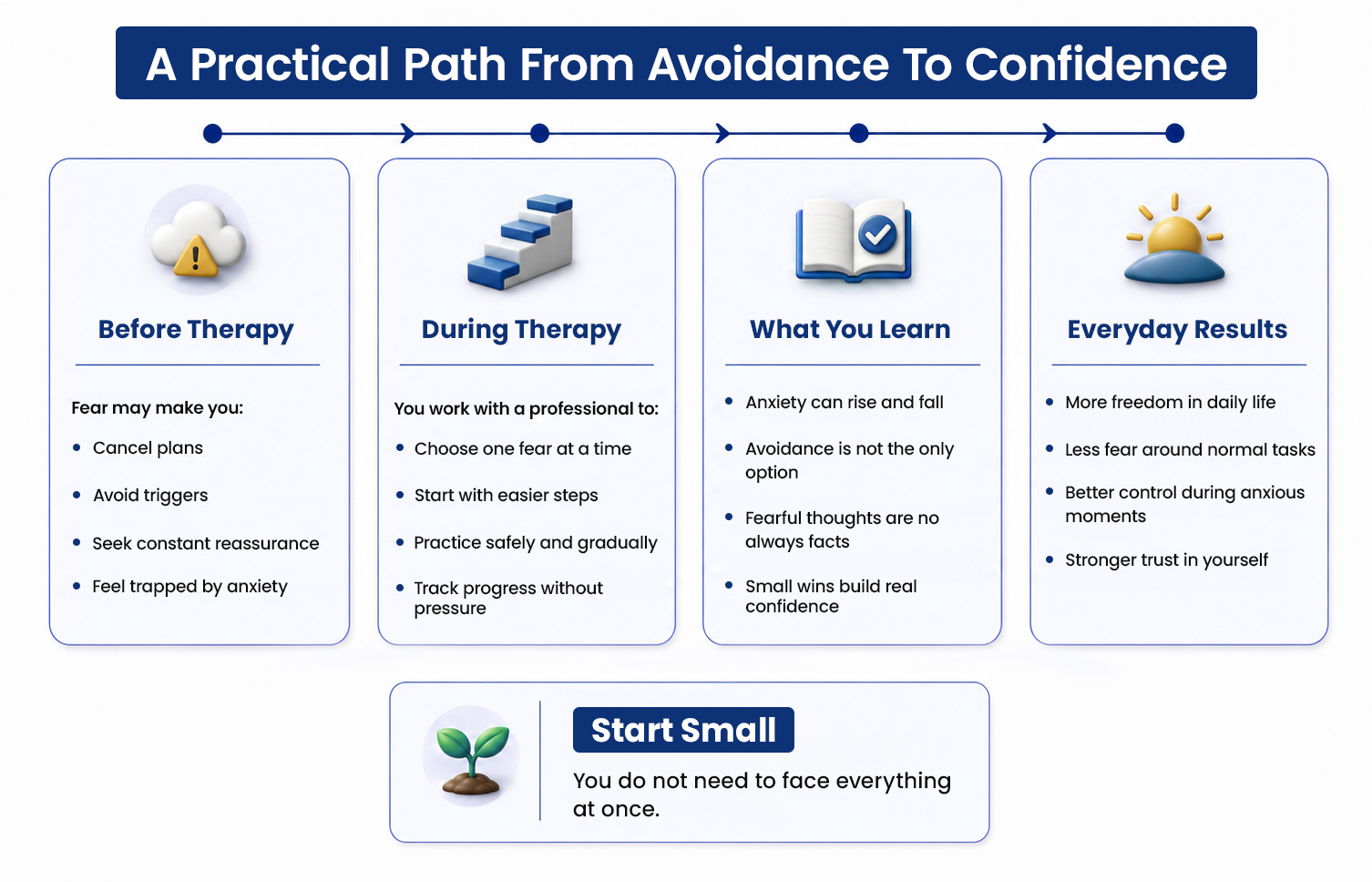
- Exposure therapy often starts with a fear hierarchy.
- Triggers are ranked from least distressing to most distressing.
- Clinicians may use Subjective Units of Distress (SUDS) ratings to measure how difficult each step feels.
- Sessions usually include practicing exposures and rating distress levels.
- The person stays in the situation long enough for new learning to happen.
- Exercises are repeated over time so the brain can build tolerance.
- Homework practice is often part of the treatment process.
- Therapists may teach breathing, grounding, or cognitive tools for support.
- A key goal is to reduce safety behaviors that keep fear active.
- Safety behaviors may include checking exits, carrying reassurance items, calling someone for comfort, or only staying if escape feels easy.
- If safety behaviors continue, the brain may think the person only stayed safe because of those behaviors.
- The number of sessions varies depending on the condition and severity.
- Some phobia treatments may move faster.
- PTSD, OCD, and more complex concerns may need longer treatment.
- Progress depends on consistency, correct pacing, and enough repetition in daily life.
Does Exposure Therapy Work?
Small Steps Can Lead to Real Confidence
When to Consider an Exposure Therapist or Anxiety Specialist
- Fear is interfering with school, work, or daily responsibilities.
- Anxiety or avoidance is affecting relationships or social life.
- Fear is disrupting sleep, travel, or normal routines.
- Avoidance is reducing daily independence or making simple tasks feel difficult.
- Professional support is especially important if panic symptoms are present.
- Seek qualified help if there are OCD symptoms, such as compulsions, intrusive thoughts, or repeated reassurance-seeking.
- Support is important when there is trauma-related avoidance, especially after distressing or traumatic experiences.
- If self-harm thoughts are present, professional help should be sought urgently.
- Exposure therapy should not be self-directed for serious conditions such as PTSD, severe panic disorder, or OCD.
- A qualified therapist can make exposure work safe, gradual, structured, and clinically appropriate.
Why Choose AZZ Medical Associates
- All insurance accepted
- No wait time in appointments
- HIPAA-secure telehealth
- Same-day/next-day appointments
- Walk-in appointments
- Medication management
- Structured follow-ups
- Evidence-based care
- Clear communication
- Exposure therapy support
- Real-life coping strategies
Avoidance Feels Safer Until It Starts Controlling You
Frequently Asked Questions About ERP Therapy
What is ERP therapy?
ERP stands for Exposure and Response Prevention. It is a structured form of therapy that helps people gradually face fears, intrusive thoughts, triggers, or uncomfortable situations without using avoidance, reassurance, rituals, or compulsive behaviors to feel safe. Over time, ERP can help reduce the power fear has over daily life.
Who can benefit from ERP therapy?
ERP therapy is often used for people struggling with OCD, anxiety, panic-related avoidance, phobias, intrusive thoughts, and fear-based routines. It may be helpful when symptoms start interfering with work, school, sleep, relationships, travel, or independence. A mental health professional can help decide whether ERP is the right approach based on your symptoms and comfort level.
How does ERP help with OCD?
OCD often creates a cycle of intrusive thoughts, anxiety, and compulsive behaviors. ERP helps break that cycle by teaching you how to face a trigger while resisting the urge to perform a ritual or avoidance behavior. The goal is not to force discomfort, but to help your brain learn that anxiety can rise, fall, and become more manageable without compulsions.
Is ERP therapy safe?
ERP therapy should be done in a gradual, planned, and supportive way with a qualified therapist. A trained specialist helps you start with manageable steps, build confidence slowly, and avoid exposures that feel too intense too soon. For serious symptoms such as PTSD, severe panic disorder, OCD, or self-harm thoughts, ERP should not be self-directed without professional guidance.
What happens during an ERP therapy session?
During ERP therapy, your therapist may help you identify fears, triggers, avoidance patterns, and compulsive responses. Together, you create a step-by-step plan that starts with easier challenges before moving toward harder ones. You may practice facing certain thoughts, situations, or sensations while learning healthier ways to respond.
How long does ERP therapy take to work?
The timeline depends on the severity of symptoms, how long the fear cycle has been present, and how consistently the therapy plan is followed. Some patients notice small improvements as they begin practicing new responses, while others need more time and support. ERP is usually most effective when sessions are structured, consistent, and guided by a trained professional.
When should I consider ERP therapy?
It may be time to consider ERP therapy if fear, anxiety, intrusive thoughts, compulsions, or avoidance are limiting your daily life. This may include avoiding normal tasks, needing repeated reassurance, struggling with panic, feeling trapped by routines, or losing independence because of fear. If symptoms are becoming harder to manage, professional support can help you take safer, more structured steps forward.