


Mindfulness-Based Cognitive Therapy, often called MBCT, is a structured form of psychotherapy that combines mindfulness-based therapy with practical cognitive therapy tools used in CBT. The goal is not to force the mind to become silent. Instead, MBCT helps you observe thoughts, emotions, and body sensations as they appear, without automatically treating every thought as true or urgent.
At AZZ Medical Associates, MBCT can be used as part of a broader mental health care plan for people dealing with recurrent depression, anxiety, chronic stress, rumination, worry, emotional reactivity, intrusive thoughts, and other mood-related challenges.
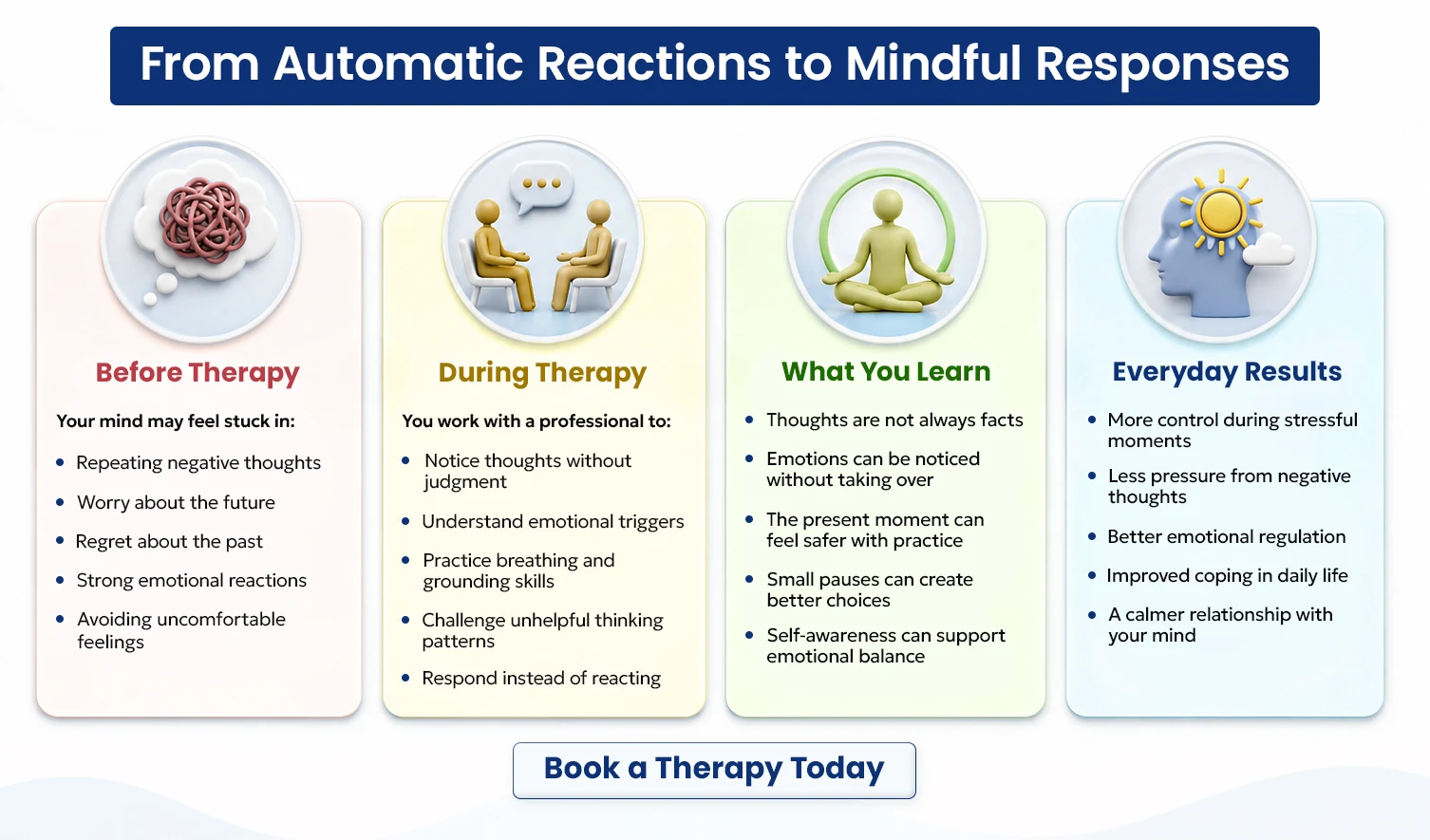
Why the Mind Gets Stuck: Causes Behind Negative Loops
Exploring the Cognitive Vulnerability of Mind
How MBCT Addresses these Mind States
Doing mode: Analyzing, fixing, comparing, planning, and trying to solve the problem.
Being mode: Noticing, slowing down, allowing, and observing what is present.
Chronic stress can make the cycle stronger. When the body’s alarm system stays switched on for too long, mood and anxiety symptoms can become harder to manage.
Note: This authentic blog only serves educational purposes and should not be considered as medical advice.
Find Calm Between Your Thoughts
Clinical Signs You Should Seek MBCT
Changes in Your Mood That Feel “Not Like You”
- Feeling low more often than usual
- Crying easily, or feeling like you need to cry but cannot
- Feeling emotionally numb or disconnected
- Having sudden mood shifts over small things
- Feeling irritated most of the day
- Carrying guilt even when you have not done anything wrong
- Feeling emotionally heavier than usual
A Quick Self-Check
- “Is this mood different from my usual self?”
- Is it affecting my day?”
- “Has it lasted for weeks instead of just a short time?”
Changes in Sleep and Energy
- Trouble falling asleep
- Waking up repeatedly during the night
- Waking too early and being unable to sleep again
- Sleeping much more than usual
- Feeling tired even after rest
- Feeling physically heavy, slow, or drained
Changes in Focus and Memory
- Reading the same sentence repeatedly
- Forgetting basic tasks
- Losing track of time
- Feeling mentally foggy
- Taking longer to make simple decisions
- Struggling to stay present in conversations
Changes in Appetite and Comfort Eating
- Little or no hunger
- Cravings for sweet or salty foods
- Eating to calm stress
- Stomach discomfort during anxiety
- Feeling nauseous without a clear physical cause
Pulling Away from People and Daily Routines
- Stop replying to friends or family
- Cancel plans often
- Avoid calls, texts, or social situations
- Feel like conversation takes too much energy
- Skip workouts, chores, or hobbies
- Miss work, school, or responsibilities more often
Your Body Feels “On Edge”
- Headaches
- Tight chest
- Fast heartbeat
- Sweaty hands
- Shaky legs
- Muscle pain
- Jaw clenching
- Short temper without a clear trigger
- Feeling physically restless or tense
Big Shifts in How You See Yourself
- “I’m not good enough.”
- “I’m a burden.”
- “I can’t do anything right.”
- “People do not like me.”
- “I should feel ashamed.”
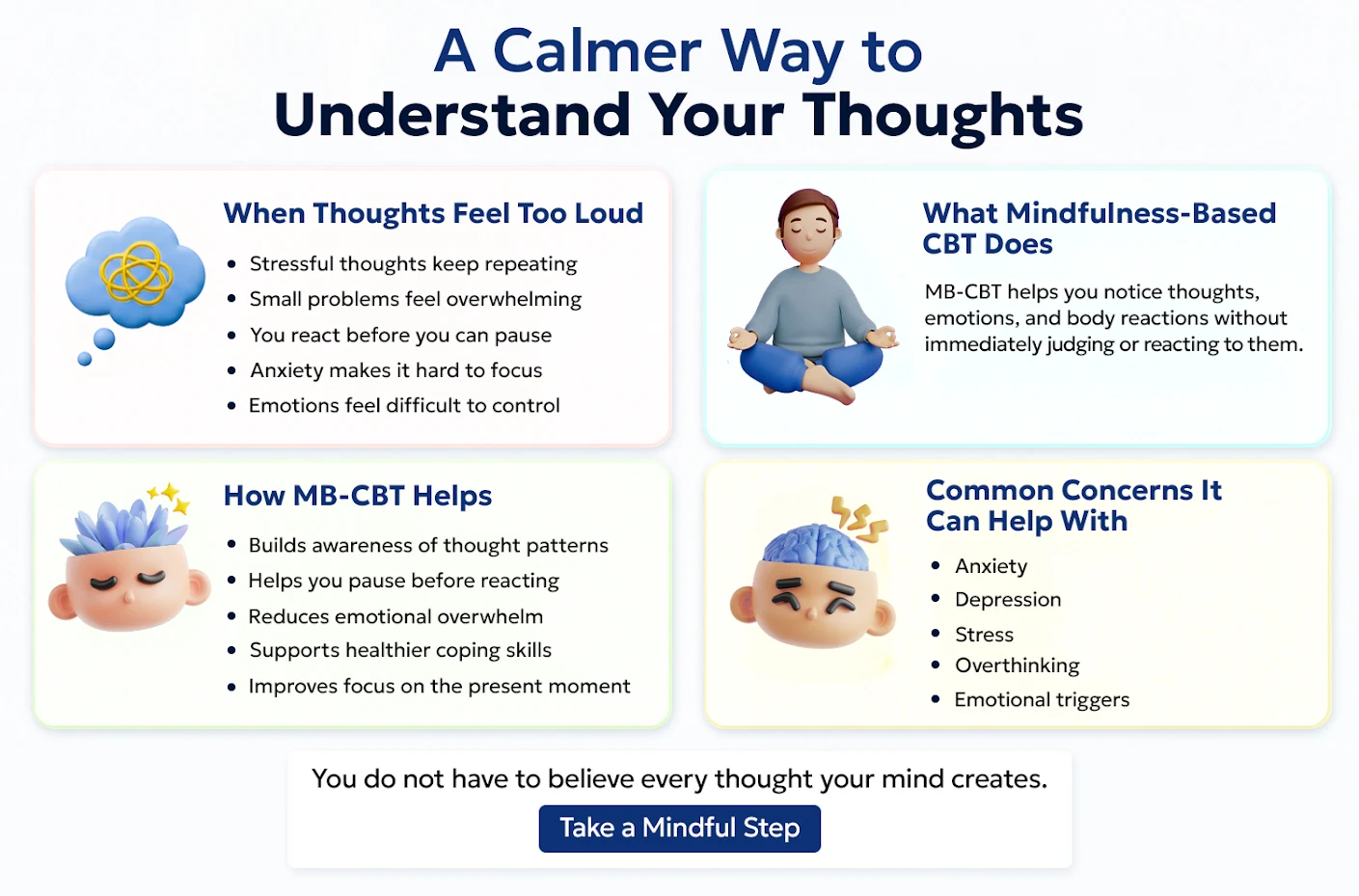
If these thoughts feel constant or difficult to shake, MBCT may help you notice them as thoughts rather than facts.
Your Mind Can Feel Lighter
Broad Symptom Clusters MBCT Targets
Depression-Related Symptoms MBCT Often Targets
- Low mood that keeps returning
- Loss of interest or pleasure, also called anhedonia
- Harsh self-blame or negative self-talk
- Rumination, where the mind replays the same painful theme
- Feeling stuck at the bottom of a mood spiral
- Fear that depression is returning
Anxiety-Related Symptoms MBCT Often Targets
- Worry that feels hard to turn off
- Racing thoughts that interrupt the day
- Physical tension, restlessness, or stomach discomfort
- Sleep problems caused by mental overactivity
- Fear of emotions getting worse
- Difficulty relaxing even in safe situations
Stress and Trauma-Related Patterns MBCT Can Support
- Constant mental scanning or feeling on guard
- Emotional reactivity, where small things feel intense
- Feeling disconnected from the body
- Getting pulled into the past
- Feeling pushed into future fears
- Difficulty slowing the nervous system down
Break the Overthinking Cycle
Causes of Emotional Changes
Life Events and Heavy Stress
- Breakups, divorce, or family conflict
- Job loss or financial pressure
- Moving to a new place
- School stress or exams
- Caregiving responsibilities
- Major changes at work
- Marriage, a new job, or other “positive” changes that still require adjustment
Burnout and Long-Term Overload
- Rest does not restore you
- The day feels heavy before it begins
- Small tasks feel overwhelming
- You feel detached from your own life
- Your patience is low most of the time
- You feel emotionally flat or overextended
Grief and Loss
Grief is not only connected to death. It can also come from:
- Losing a friendship
- Losing health or independence
- Losing a dream or long-term goal
- Major family changes
- A shift in identity or routine
Hormone Shifts and Cycle-Related Mood Changes
- Before a menstrual period
- After childbirth
- During perimenopause
- With thyroid-related issues
Health Issues That Affect Mood
- Thyroid problems
- Low iron
- Low vitamin D or B12
- Chronic pain
- Migraine
- Blood sugar swings
- Sleep apnea or poor sleep quality
If your mood changes suddenly or feels difficult to explain, a medical evaluation may help rule out physical contributors.
Medicines, Substances, and Withdrawal
- Alcohol worsening sleep and low mood
- Excess caffeine increasing shakiness or anxiety
- Medication changes causing emotional shifts
- Stopping medication too quickly causing symptoms to return or intensify
Trauma and Long-Term Fear Responses
- Strong startle response
- Trouble feeling safe
- Nightmares
- Feeling switched on all the time
- Avoiding people, places, or topics
- Emotional shutdown or numbness
Expert Insights
How MBCT Works: Mind, Body, and Brain
- Research on mindfulness-based interventions often points to several possible change drivers:
- Reduced cognitive and emotional reactivity
- Less rumination and worry
- Stronger present-moment awareness
- Increased self-compassion
- More psychological flexibility
- Better ability to pause before reacting
Summary of 86+ Studies on the Effectiveness of MBCT
Research on MBCT includes clinical trials, cohort studies, systematic reviews, and broader reviews of mindfulness-based therapy. These studies explore how MBCT may affect depression, anxiety, stress, emotional regulation, relapse prevention, and psychological well-being.
| Focus Area | Action Items | Improvement Areas |
|---|---|---|
| Mixed clinical populations | Mindfulness-based therapy often shows moderate benefits and may perform similarly to CBT for common symptoms. | Anxiety, depression, stress |
| Multiple health and mental health conditions | Mindfulness-based interventions often perform better than no or minimal treatment and may be similar to evidence-based care in some trials. | Depression, pain, addictions, emotional distress |
| Broad symptom groups | Stronger effects are usually seen compared with passive controls; effects are smaller compared with active treatments. | Symptoms across conditions |
| Recurrent depression | MBCT has strong evidence for reducing relapse or recurrence risk over follow-up. | Depressive relapse prevention |
| Mechanism-focused studies | Benefits are often linked with reduced rumination, less worry, and lower emotional reactivity. | Psychological functioning, well-being |
| Mindfulness as a mediator | Increases in mindfulness may help explain better outcomes, though study methods vary. | Mindfulness change, emotional outcomes |
| Home practice and adherence | People often complete a meaningful portion of assigned practice, and more practice may have a small positive link with results. | Skill use, intervention outcomes |
| Chronic pain | MBSR and CBT may both help pain-related functioning and mood; neither is clearly superior overall. | Functioning, pain intensity, depression |
| Anxiety | Mindfulness-based interventions and CBT often show similar results for anxiety-related outcomes. | Anxiety, sleep, depression in some studies |
| Children and adolescents | Smaller benefits have been reported for mindfulness, anxiety, stress, and depression, especially when compared with active controls. | Anxiety, stress, mindfulness |
| Workplace stress | Mindfulness programs may reduce stress, anxiety, distress, and depression, with smaller effects on burnout. | Stress, anxiety, distress, burnout |
Pause Before Stress Takes Over
Scope: Who Can Get Help from MBCT?
- Anxiety disorders
- Bipolar disorder, usually as a supportive skill-based approach rather than a stand-alone treatment
- Addictions and cravings, especially when urges are driven by emotional reactivity
- Chronic pain and fibromyalgia
- Depression connected with medical conditions
- Broader emotional distress and long-term stress
- Rumination, worry, and intrusive thoughts
- Trauma-related patterns where the nervous system stays on alert
Expert Insights
What MBCT Looks Like at AZZ Medical Associates
At AZZ Medical Associates, MBCT may be discussed as part of a broader care plan that can include mental health support, lifestyle guidance, medical evaluation, and medication management when clinically appropriate.
- A typical MBCT-informed plan may include:
- In-clinic or telehealth appointments, where available
- Support from qualified mental health professionals
- Therapy-focused care planning
- Coordination with medical or psychiatric care when
needed - Personalized support based on symptoms, goals, and safety needs
- Practical strategies for using mindfulness skills outside the therapy room
- A typical MBCT program may include:
- Weekly sessions led by a trained clinician
- Education about how thoughts, mood, body sensations, and behavior interact
- Guided mindfulness meditation therapy practices
- Between-session practice using recordings or structured exercises
- Mindfulness skills applied to daily routines such as eating, showering, walking, driving, or chores.
A Practical Reality of MBCT
MBCT works best when it becomes part of everyday life. It is not only something you talk about during therapy. The goal is to practice the skills often enough that they become available when stress, low mood, anxiety, or intrusive thoughts appear.
Mindfulness-Based Cognitive Therapy Techniques
Mindfulness Meditation
Body Scan
Mindful Breathing
Three-Minute Breathing Space
Mindful Movement, Yoga, and Stretching
Walking Meditation
Sitting With Thoughts
Everyday Mindfulness
Benefits of MBCT: What Research Keeps Showing
- Reduced relapse risk for recurrent depression
- Longer time before relapse in some major studies
- Fewer residual depressive symptoms
- Less rumination and worry
- Lower stress and emotional distress
- Improved emotional regulation
- Better ability to notice thoughts without reacting automatically
- Better urge control in some addiction-focused research
- Improvements in attention, memory, or processing speed in some groups
- Stronger subjective well-being and life satisfaction
Medication decisions should always be made with a prescribing clinician.
Your Mind Can Feel Lighter
MBCT vs CBT, Mindfulness vs MBSR
Is mindfulness CBT?
Traditional CBT
MBCT
MBSR
How to Get Started and What to Ask a Therapist
At AZZ Medical Associates, MBCT may be considered as part of a personalized care plan that can include therapy, lifestyle support, medical evaluation, and psychiatry care when appropriate.
- Have you worked with recurrent depression, anxiety, trauma-related patterns, or my specific concern?
- Do you offer MBCT in a group format, individual format, or as part of broader therapy?
- What does the weekly schedule look like?
- How much home practice is expected?
- What if meditation feels difficult at first?
- How do you combine
- MBCT with medication management, if needed?
- How will we track whether the approach is helping?
Why Choose AZZ Medical Associates for MB-CBT
- All insurance accepted
- No wait time in appointments
- HIPAA-secure telehealth
- Same-day/next-day appointments
- Walk-in appointments
- Medication management
- Structured follow-ups
- Evidence-based care
- Clear communication
- MB-CBT therapy support
- Real-life coping strategies
Learn to Notice Thoughts Without Being Controlled by Them
AZZ Medical Associates can help you explore whether Mindfulness-Based Cognitive Therapy fits your symptoms, goals, and care needs.
Frequently Asked Questions
What is MBCT in one line?
MBCT is a structured therapy that combines mindfulness skills with cognitive tools so you can notice thoughts and moods without getting pulled into old emotional loops.
What if my mind will not go quiet during meditation?
That is normal. MBCT does not require a blank mind. The practice is noticing distraction and returning attention again, without judging yourself.
Can MBCT help if I am currently depressed?
MBCT was first developed for relapse prevention in recurrent depression, but later research has explored it for active symptoms too. The right fit depends on severity, safety, and your clinical needs.
Is mindfulness therapy, or terapia mindfulness, the same as MBCT?
Mindfulness therapy is a broad term. MBCT is a specific, structured, evidence-informed approach that focuses on cognitive patterns, depression vulnerability, rumination, and emotional reactivity.
Do I have to stop medication to do MBCT?
No. Many people use MBCT alongside medication. Any medication change should be discussed with a prescribing clinician and done through a safe plan.
Is MBCT the same as CBT?
No. MBCT uses ideas from CBT, but it places more focus on mindfulness, present-moment awareness, and changing your relationship with thoughts instead of only challenging thoughts.
Who may benefit from MBCT?
People with recurrent depression, anxiety, chronic stress, rumination, worry, emotional reactivity, intrusive thoughts, burnout, chronic pain, trauma-related patterns, addictions and cravings, or fibromyalgia may benefit from discussing MBCT with a clinician.