
Medically Reviewed by:
Qaisar H Usmani, MD
Read more
Publish On:
Last Updated on
- September 25, 2026
At AZZ Medical Associates, we treat PRP hair restoration like any medical decision: confirm you’re a good candidate, set realistic expectations, and follow a consistent protocol, because outcomes depend heavily on patient selection + technique + aftercare, not marketing.
What PRP Therapy for Hair Loss is (and what it isn’t)
| Protocol element | Example used in published protocol |
| Early phase | Monthly sessions early in treatment |
| Maintenance | Sessions spaced out after the initial phase (maintenance over months) |
| Administration | Multiple small scalp injections in affected areas |
| Assessment window | Outcomes measured over months (not days) |
Expert Insights
Why PRP Fails for Some Patients (And It’s Not the Platelets)
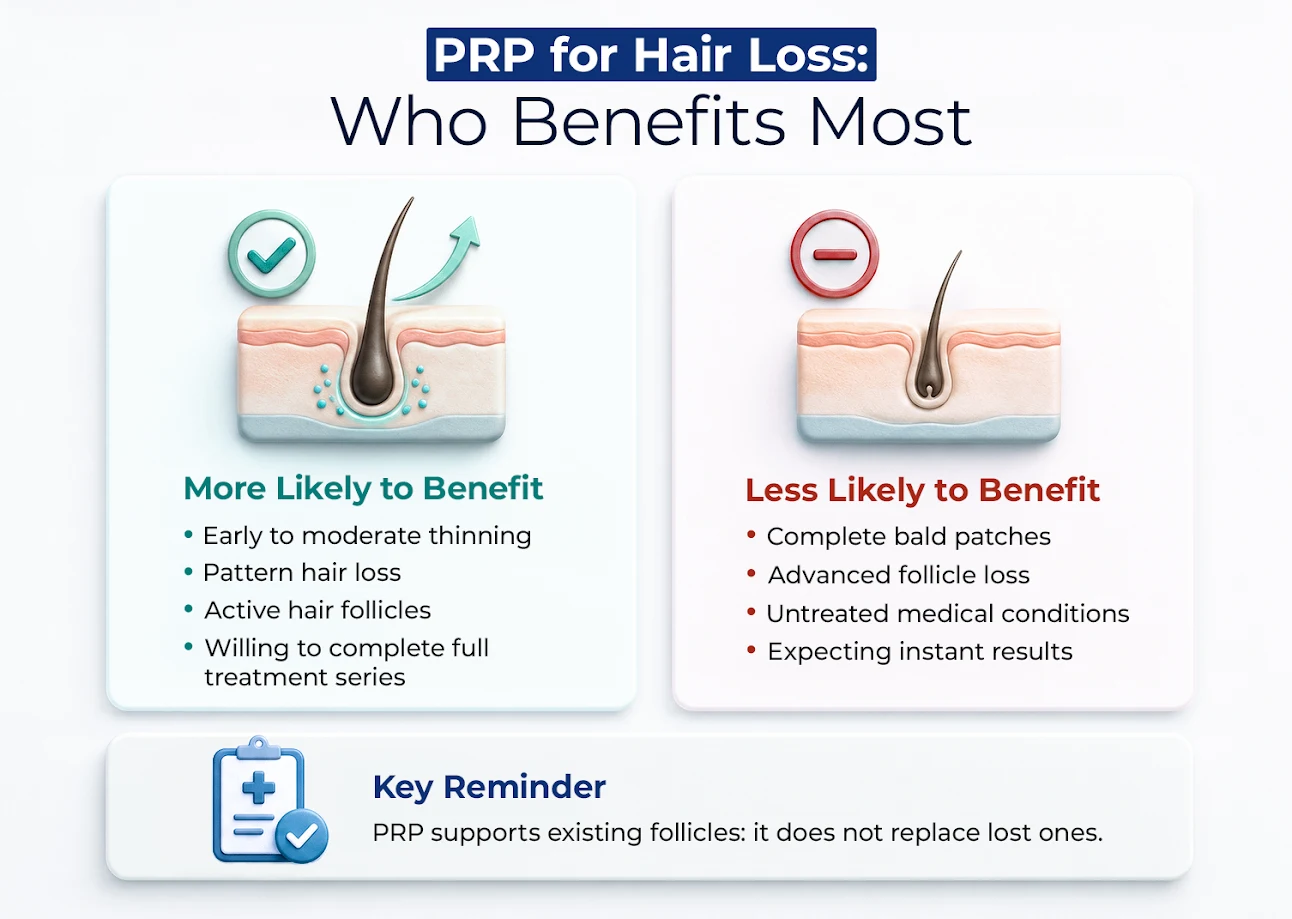
PRP doesn’t fail because platelets “don’t work.” It fails when expectations don’t match biology.
Patients with advanced follicle loss, untreated medical contributors, or inconsistent follow-up are less likely to see meaningful change.
The strongest outcomes usually come from correct diagnosis + consistent sessions + proper aftercare, not from chasing the highest platelet count alone.
Who PRP for Alopecia Helps Most (and who should skip it)
Better-fit candidates
People Who Should Pause or Avoid PRP
Know Before You Commit
What Happens at a PRP Hair Loss Consultation
- What type of hair loss do you have? (Pattern loss vs shedding vs scarring conditions, these don’t behave the same.)
- What’s your baseline? (Photos, density review, hair pull history, timeline.)
- What’s your plan? PRP alone vs PRP + other evidence-based options.
Example PRP protocol used in androgenetic alopecia studies
| Protocol element | Example used in published protocol |
| Early phase | Monthly sessions early in treatment |
| Maintenance | Sessions spaced out after the initial phase (maintenance over months) |
| Administration | Multiple small scalp injections in affected areas |
| Assessment window | Outcomes measured over months (not days) |
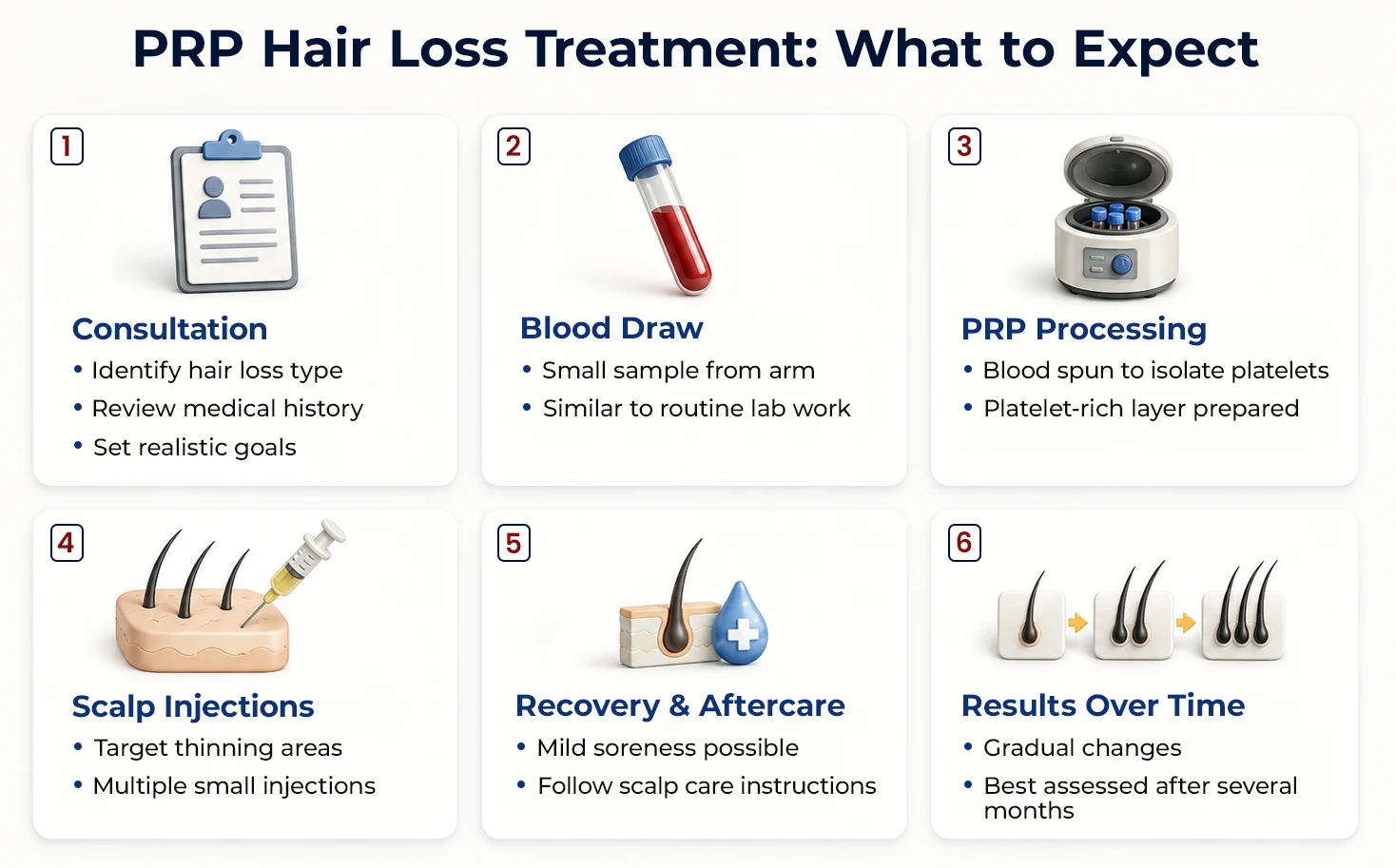
Step-by-step: PRP Injections for Hair Loss
Step 1: Blood draw
Step 2: Processing
Step 3: Scalp prep + injections
How Long Does it Take?
Support the Hair You Still Have
Aftercare: What to Do (and what to avoid)
Pre-treatment Guidelines
- Avoid NSAIDs/anti-inflammatories for about a week beforehand (as instructed).
- Avoid alcohol close to the appointment window (commonly ~24 hours).
- If you use topical minoxidil, some protocols recommend holding it briefly before treatment.
Post-treatment Guidelines
- Continue avoiding NSAIDs for a period after treatment (commonly about a week).
- Avoid strenuous exercise/heat exposure for a short window (often ~48 hours).
- Hold minoxidil for a period after PRP (some protocols recommend ~10 days).
- Follow scalp-care guidance (washing timing, avoiding harsh products) per your clinician.
Timeline: When PRP Results Show
- Weeks 0–4: You may notice less shedding (or no change yet).
- Months 2–4: Early texture/strength improvements may start showing.
- Months 4–6: Visible density changes are more likely if you’re responding.
- 6–12 months: Better sense of peak response, depending on protocol consistency.
Risks, Side Effects, and Safety Notes
Expert Insights
What Patients Often Miss When Comparing PRP Providers
- Price comparisons don’t tell the full story.
- Protocol quality, injection depth, treatment spacing, and follow-up tracking matter far more than a single session cost.
- A lower upfront price with no long-term plan often leads to frustration.
- Patients should ask how progress is measured and what happens if results are slower than expected.
How Many Sessions Do You Typically Need?
Expected PRP Outcomes & Common Side Effects
| Outcome/Effect | What reports commonly show |
| Hair density/count | Statistically significant improvements reported in androgenetic alopecia protocols |
| Shedding/hair pull | Improvement noted during follow-up in some protocols |
| Typical short-term effects | Mild local tenderness/itching/swelling can occur |
| Higher-risk but less common | Infection/nerve injury/tissue damage are possible procedural risks |
PRP Hair Loss Treatment Cost + Insurance Reality
- Insurance often doesn’t cover PRP for hair loss. Many PRP uses are considered elective/innovative depending on the indication and policy.
- Cost varies based on:
- How many sessions are included
- The PRP system used
- Provider expertise
- Whether add-ons (like microneedling) are bundled
A Plan, Not a Guess
Choosing a Provider: What Actually Matters
- Diagnosis-first approach: You should be told what type of hair loss you have and whether PRP is expected to help.
- Clear protocol: session count, spacing, maintenance plan, and what “success” means.
- Transparent expectations: what PRP can improve (thinning/miniaturization) and what it can’t (advanced follicle loss).
- Safety screening: meds, platelet/bleeding issues, pregnancy, systemic conditions.
Common PRP Questions and Answers
| Question | Straight answer |
| Does PRP work for hair loss? | It can help pattern hair loss/hair thinning when follicles are still active; it’s not a guaranteed fix. |
| How many PRP sessions for hair regrowth? | Commonly, multiple sessions up front, then maintenance. Protocols often start monthly before spacing out. |
| Is PRP for alopecia painful? | Expect brief pinching/pressure; discomfort is usually short-lived. |
| Is there downtime? | Usually minimal; follow aftercare (avoid heat/exercise briefly) to reduce irritation. |
| What should I avoid before/after PRP? | Many protocols advise avoiding NSAIDs around treatment and pausing certain topicals like minoxidil for a set window. |
| Is PRP safe? | Generally well-tolerated, but risks exist (pain, infection, nerve injury/tissue damage). |
| When will I see results? | Think months, not days, often3–6 months for visible change if you respond. |
| Is PRP covered by insurance? | Often not for hair loss; many uses are considered elective/innovative depending on policy. |
Results Take Time. We Track Them
Why Do People Choose Us
- All insurance accepted
- Multiple locations across New Jersey
- No wait time in appointments
- Same-day/next-day appointments
- Walk-in appointments
- In-house labs/diagnostics (where available)
- Medication management
- Follow-up care
- Telehealth/virtual visits
- Evidence-based care
- Clear communication
Clarity Over Promises