Medically Reviewed by:
Thomas Ortiz, MD
Read more
Publish On:
Last Updated on
- September 28, 2026

Most people don’t visit primary care providers because it usually happens in pieces. Urgent care for sudden symptoms, a one-time physical somewhere else, then a specialist when something feels serious. Each visit solves one problem, but a complete healthcare checkup is still pending.
A primary care physician (PCP) is one regular doctor who knows your baseline health conditions, understands your history, has access to all your medical documents, and provides care without unnecessary document requirements or repeated tests.
In this read, we’ll explain how a primary care doctor improves continuity of care, understands your medical history, keeps records, sends organized referrals, improves preventive care, and helps support long-term condition management.
- Did you know?
- About 1 in 10 people did not have a usual source of care
- 2 in 5 U.S. adults report the same PCP or place of care for 5+ years.
- From 2012 to 2021, % of adults without care rose by 21%
- 12.5% delayed care because they were too busy
- 10.6% delayed or skipped because no appointments were available
- 4.4% couldn’t find a provider who accepted their insurance.
Turn Scattered Visits Into One Clear Record
Urgent care manages the immediate issue, not your full medical history. One AZZ PCP keeps your notes, meds, labs, and diagnoses in one place and provides holistic care.
Your Primary Health Care = The Continuity of Care
Seeing the same doctor again creates an understanding between PCP and patient, which you can’t replicate with one-off visits.
Your PCP learns your baseline condition and understands what is normal for you, including:
- Your normal blood pressure range
- How do you typically describe symptoms
- Your family medical history
- Issues you are susceptible to
- What medications have you tried before
- Side effects you’ve had
- What you’re worried about
- What runs in your family
- What you want addressed before it becomes urgent
This is important because many chronic issues like diabetes, high blood pressure, and high cholesterol do not have obvious symptoms in their initial stages. During your routine checkup, a healthcare provider who understands your health is more likely to notice the small changes that a new clinician might dismiss.
A Primary Care Physician is Your Saviour
Specialists are trained to focus on specific areas of medical care. Primary care providers are trained to manage a wide range of health conditions.
A PCP’s scope typically includes chronic condition management (like asthma, diabetes, and heart disease), mental and behavioral health concerns, basic women’s health support, musculoskeletal issues, ear/nose/throat concerns, minor procedures, and more.
With you going to different clinics and different doctors, the important information, like old labs, past medications, family history, and what changed since last time, might be missed. A dedicated PCP will keep the full record and will be able to recognize early medical signs before they turn into bigger or more complicated problems.
One PCP Connects Symptoms That May Look Separate
Sleep, mood, appetite, and energy changes are reviewed together, not as separate visits. Our PCP view the whole picture to support personalized treatment.
Fewer Delays Between Visits, Tests, and Referrals
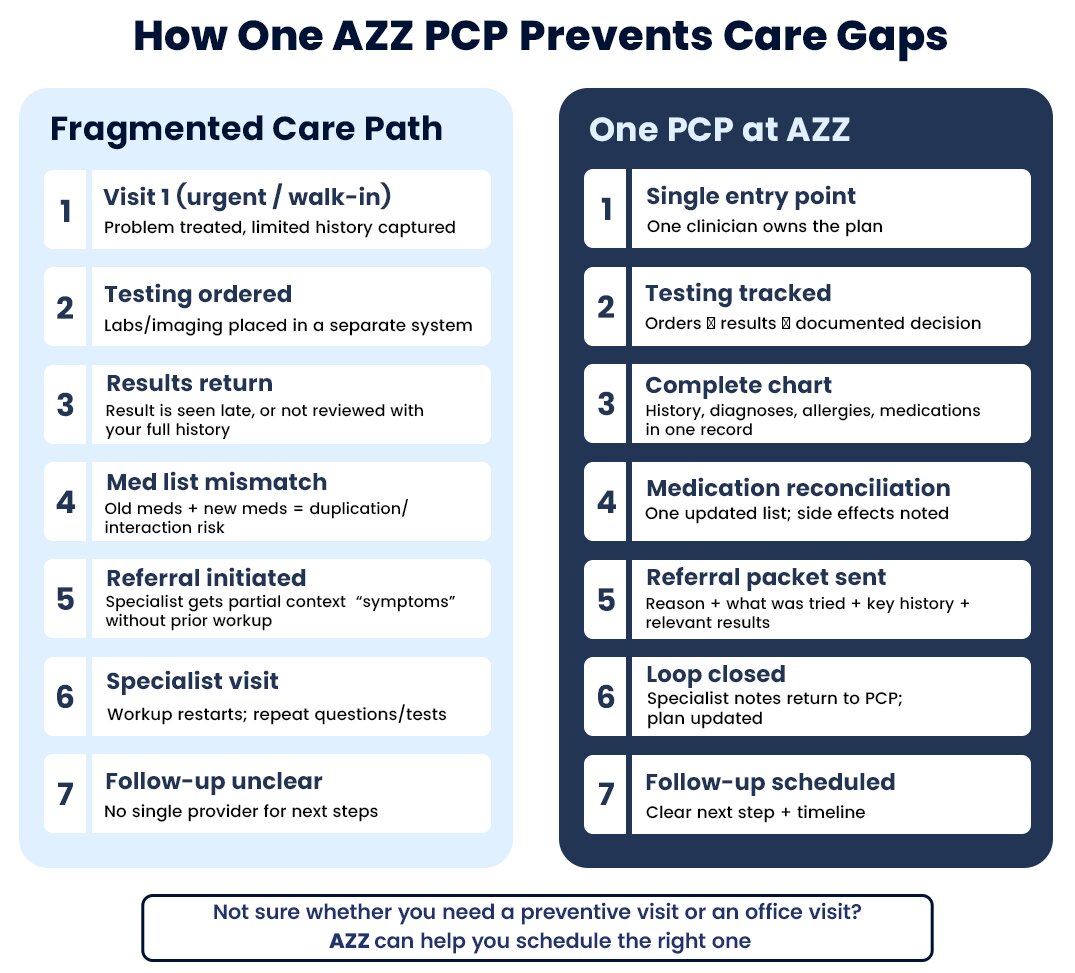
Healthcare is expensive in general, but not with AZZ Medical Associates. It can become frustrating when Healthcare is disorganized and divided into different clinics. If you are visiting multiple clinicians, you might end up with duplicated tests, have any medication that conflicts with what you are already taking, or have crucial details missed that are important for long-term health.
When you are visiting a dedicated primary care doctor, care coordination becomes important. Your PCP keeps the master medical history that you have shared with them from the start. They transfer this information to the specialists, which helps them diagnose your condition better and align medication, follow-up, and test results accordingly.
Referrals to specialists are more specific when they are from a PCP who can document why a referral is needed, what treatment has already been tried, what your medical history is, and what areas the specialist should focus on.
Preventive Care That’s Based on Your Risk Factors
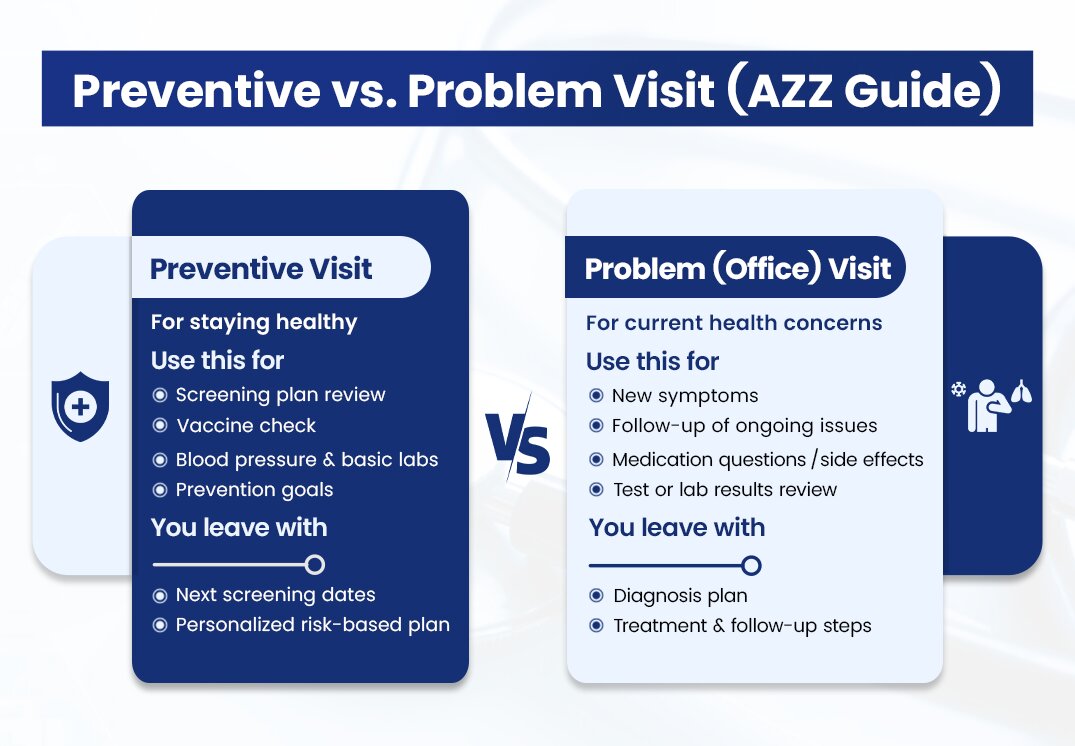
Preventive care isn’t only a yearly physical exam. It is targeted and built around your age, your history, your family medical history, and what’s changed since your last visit.
A preventive care visit is meant to catch medical issues before the symptoms become severe and lead to urgent care/ER visits. Depending on your age and risk factors, preventive care can include
- Blood pressure check
- Blood glucose testing
- Cholesterol screening
- Screening discussions (for example, colorectal screening, based on age/risk)
- Immunization review
- Mental Health screening (when appropriate)
- Counseling on tobacco, alcohol, weight, and lifestyle habits
And when your risk is higher, the schedule changes.
If colon cancer or breast cancer runs in your family, “the usual timeline” will be different for you. Your PCP, who knows your medical history, will start screening earlier and focus on a particular issue faster rather than waiting for symptoms to prove something is really wrong.
Preventive Care Built Around Your Risk
Preventive care is scheduled based on age, history, and family risk. If risk is higher, your PCP adjusts screening timing to detect problems and give treatment early instead of waiting.
Chronic Condition Management Without the Fuss
In chronic conditions like diabetes, hypertension, asthma, arthritis, high cholesterol, and heart disease, a dedicated PCP can reduce avoidable urgent visits.
Your PCP will monitor whether the care plan is working and if it needs adjustment, and help catch signs and symptoms before they become complicated and escalate. They also protect you from “treatment whiplash,” where each new visit creates a new treatment plan because the clinician doesn’t have the full context of your condition.
Access and Follow-up Care Before Issues Become Serious
People often underestimate the day-to-day benefit of having an established provider. It’s not just the big diagnoses that will help you maintain long-term wellness; It’s the consistent visits that improve your existing health and prevent disease.
Here’s what people actually notice when they have a regular doctor:
- “Do I need to worry about this symptom?” questions
- Holistic care (physical, emotional, mental) is covered
- Accurate medication management
- Routine screenings
- Earlier detection because the baseline is documented
- Better care coordination with specialists
- Fewer avoidable ER visits and hospitalizations
- Stronger chronic condition management over time
- Clearer follow-up care and ongoing support
- Often reduces unnecessary repeat testing and avoidable urgent care use
Plus, when you’re already “in the system” with one practice, you typically get new appointments sooner than someone calling as a brand-new patient in a rush. That access reduces unnecessary emergency room visits, which are costly, time-consuming, and often the wrong setting for non-emergencies.
Follow-Up That Grow At Your Pace
At AZZ all your health concerns, including refills, results, and next steps, are handled by one consistent healthcare provider. We offer both in-person and online appointments.
Important Elements to Consider before Choosing A Primary Care Doctor
If you’re picking (or switching) a PCP, treat it like you are choosing a long-term partner for your health.
A few grounded ways to decide:
- Use your insurance during enrollment to confirm who’s in-network and whether you need to designate a PCP.
- Look for listening and clarity. You want someone who explains options in plain language and takes your concerns seriously.
- Ask about coordination. How do referrals work? How are results shared? Who helps with follow-ups?
- Think “comfort,” not charisma. The right fit is the person you can be honest with, even about the stuff you’d rather avoid.
Why Choose AZZ Medical Associates for Your PCP?
Our mission is to provide personalized care plans for you to stay healthy while preventing and managing future illness. If you’re looking for a primary care physician who truly listens and partners with you in your health, AZZ is here to help.
Here’s why thousands of patients choose us:
- All insurance accepted
- 23+ locations across New Jersey
- No wait time in appointments
- Same-day/next-day appointments
- Walk-in appointments
- Mental health screening
- Preventive care
- Chronic condition management
- Coordinated Care
- Referrals to specialists
- In-house labs/diagnostics (where available)
- Medication management
- Follow-up care
- Telehealth/virtual visits
- Evidence-based care
- Clear communication
Final Words
One primary care doctor becomes the consistent point of contact for your health. because they know your baseline, medical history, medication list, labs, and referrals, and, when needed, schedule preventive care based on personal and family risk.
When a new problem arises, the evaluation starts with context instead of repeating the same work. Over time, this reduces gaps in follow-up and supports safer long-term management of chronic conditions.
Choose AZZ for Ongoing Primary Care
Primary care works best when access is consistent and records stay centralized. AZZ supports coordinated health care across visits, testing, and specialized referrals to support long-term wellness.