
Medically Reviewed by:
Thomas Ortiz, MD
Read more
Publish On:
Last Updated on
- October 13, 2026

A primary care physician (PCP) is the first healthcare professional that you turn to when you have non-emergency health concerns. In primary health care, PCPs evaluate and treat common illnesses, manage chronic conditions, help prevent disease, and decide when you will need specialists.
A PCP can be:
- A physician (M.D. or D.O.)
- In many practices, a nurse practitioner (NP) or physician assistant (PA) working as part of a physician-led team
Have Symptoms That Need Attention?
Who Typically Serves as a PCP
Usually, a family medicine doctor or an internal medicine doctor for adults and a pediatrician for children serve as the PCP. Some patients see an obstetrician (OB) and gynecologist (GYN) as their main provider for women’s health needs. Older adults may choose a geriatrician as their PCP.
What Primary Care Physicians Handle
- Conduct annual physicals and routine exams, including school and sports physicals required by NJ school districts
- Update vaccines such as flu, tetanus, and shingles
- Treat short-term illness like flu, rashes, ear pain, UTIs, & minor injuries
- Monitor blood pressure, cholesterol, blood sugar, weight, mood, and sleep
- Preventive screenings, such as colon cancer screening and mammograms
- Evaluate results and determine when specialist referral is needed like cardiology, pulmonology, orthopedics, endocrinology, etc.
- Manage long-term conditions such as hypertension, diabetes, asthma, depression, obesity, and arthritis
- Review medications to prevent drug interactions, including prescription and over-the-counter (including supplements)
Manage Long-Term Chronic Conditions
Signs and Symptoms Evaluated by a Primary Care Physician
Infection-type Symptoms
- Sore throat with fever, swollen glands, or painful swallowing
- Persistent cough, sinus pressure, or congestion
- Ear pain, reduced hearing, or discharge
- Burning urination, urgency, or pelvic discomfort
- Rash that spreads or becomes painful
- Fever with fatigue and body aches
Pain & New Symptoms
- New abdominal, back, or joint pain
- Sports injuries, sprains, or minor falls with swelling or limited movement
- Headaches that are new or frequent
Medication Side Effects or Confusion
- Dizziness after starting a new medication
- Nausea, rash, swelling, sleep disruption, or mood changes
- Questions about medication combinations and safety
Ongoing-condition Symptoms
- Higher-than-usual home blood pressure readings
- Blood sugar fluctuations
- Asthma or COPD symptoms that flare more often
- Anxiety or depression symptoms that affect daily functioning
If symptoms are severe, like chest pain, trouble breathing, choking, uncontrolled bleeding, loss of consciousness, or sudden numbness or weakness, skip the PCP visit and go to emergency care, call 911 or go to the nearest New Jersey emergency room.
Manage Long-Term Chronic Conditions
What Primary Care Treatment Includes
Treatment for Common Illnesses
- Appropriate medications when indicated (and avoiding unnecessary medications when they won’t help)
- Symptom relief plans (hydration, rest strategy, OTC guidance when safe)
- Follow-up instructions: what should improve, what should not be ignored
Treatment for Chronic Conditions
- Medication initiation or adjustment based on real measurements
- Monitoring plans and follow-ups (blood pressure logs, A1C targets, cholesterol labs)
- Referrals when complications or severity increase
Pain Management
- Physical therapy referral
- Prescription options when appropriate
- Exercise guidance and activity modifications
- Cognitive behavioral therapy referral when pain and stress feed each other
Prevention as Treatment
- Vaccines
- Screening for colon cancer, mammograms, & other age-based checks
- Lab monitoring for cholesterol, blood sugar, key markers
- Support for smoking cessation
- Nutrition guidance
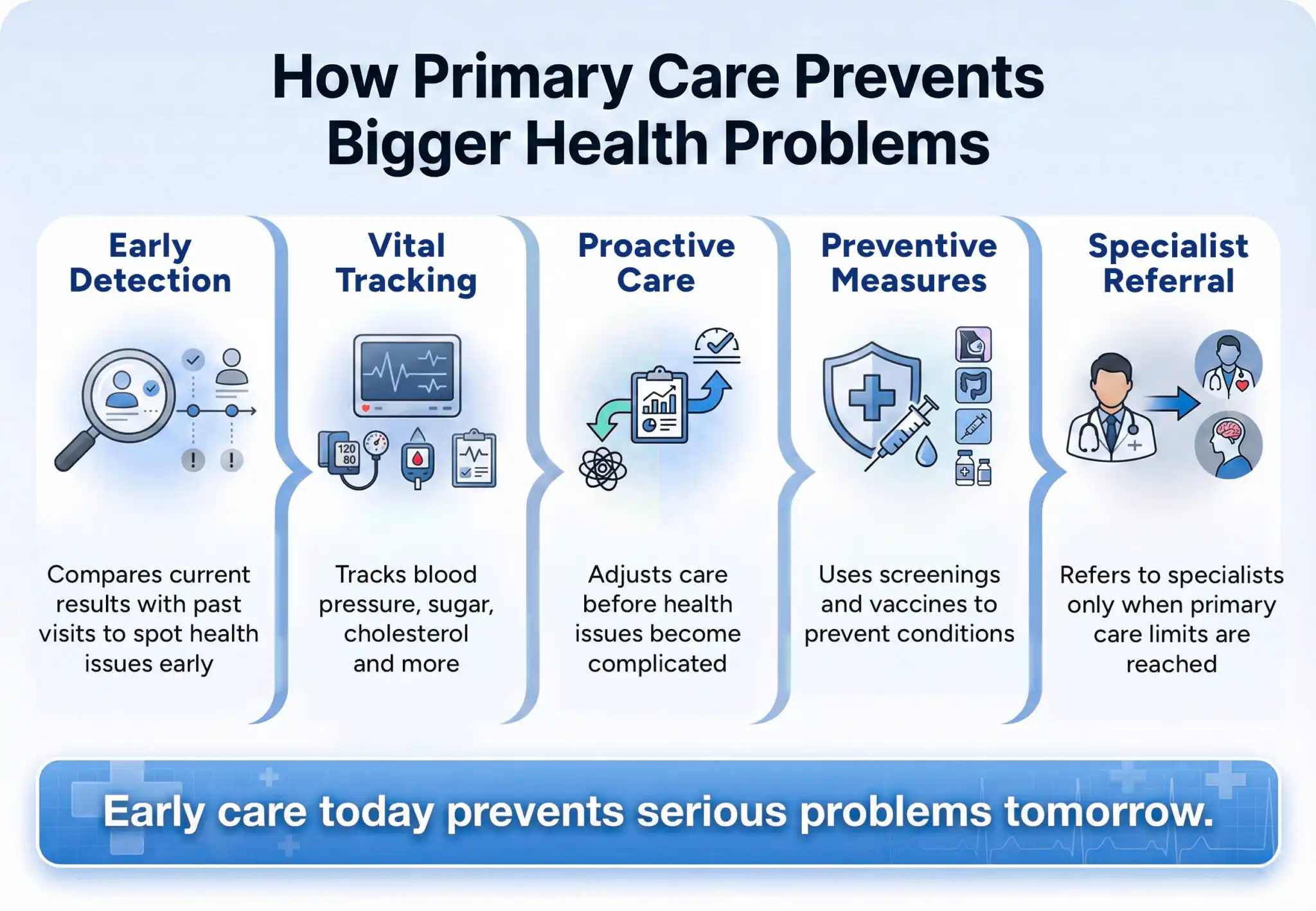
Chronic Care Conditions Your PCP Manages
A PCP helps manage chronic conditions that need consistency rather than one-time treatment. Chronic disease management in primary care is especially important in New Jersey, where conditions like hypertension and diabetes affect a significant share of adults:
- Hypertension
- Diabetes/prediabetes
- Cardiovascular disease risk factors
- Asthma
- Arthritis
- Obesity
- Mental health conditions such as depression and anxiety
- Men’s health concerns, including prostate-related issues, erectile dysfunction, and urinary symptoms
- Women’s health concerns, including menopause symptoms, osteoporosis risk, thyroid disorders, urinary incontinence, birth control, Pap testing, and prenatal care in some settings
How Primary Care Doctors Evaluate
- They focus on patient symptom history (onset, timing, triggers, what makes it better/worse)
- Review past medical and family history
- Medication & supplement review (a common cause of dizziness, stomach issues, and rashes)
Physical exam - Targeted tests when needed (labs, rapid infection tests, imaging referrals, screening orders)
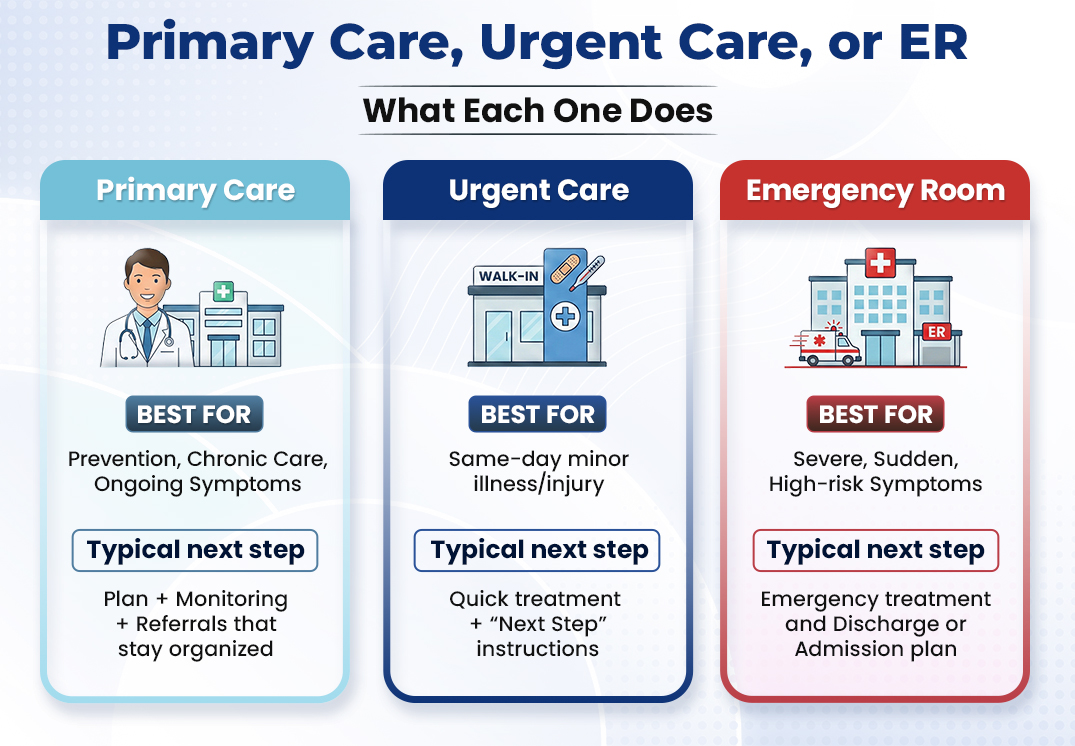
Primary Care vs Urgent Care vs ER
Staying Ahead of Preventable Illness
Preventive care reduces long-term health risks. AZZ Medical Associates PCPs manage screenings, labs, and routine exams for long-term wellness.
Primary Care
Help manage and treat non-emergency symptoms, chronic disease management, medication questions, annual exams, and follow-up after other visits. In NJ, many primary care clinics, including AZZ Medical Associates, offer same-day, walk-in, and telehealth appointments, so primary care is often just as fast as urgent care.
Urgent Care
Emergency Room
Types of Primary Care Physicians and Who They Treat
- Family medicine: all ages; some include minor procedures, sports injury care, and obstetrics in scope
- Internal medicine: adults; strong focus on chronic disease prevention and management across major organ systems
- Pediatrics: newborn through teens (and sometimes up to early adulthood); focuses on physical, behavioral, and mental health in kids
- Geriatrics: older adults with complex aging needs (mobility, memory loss, osteoporosis, arthritis)
- OB/GYN: often functions as a main provider for many women, especially during childbearing years
What Primary Care Treatment Includes
How to Choose a PCP Doctor (and changing later)
What to check first
- Confirm your insurance plan coverage (including NJ FamilyCare, Medicare, and commercial NJ plans)
- Choose a location that is convenient for routine visits, with multiple clinic locations across New Jersey, a nearby office makes consistent care easier
- Check if your PCP is board-certified.
- Experience with chronic conditions (if applicable)
- Office responsiveness (calls returned, clear scheduling)
- Communication style (warm vs formal; direct vs detailed)
- Use of secure messaging or a patient portal
- Prevention vs treatment approach (what matches your expectations)
Why Choose AZZ Medical Associates for Primary Care
- All Insurances are accepted in NJ
- No wait time in appointments
- Appointments within 24 hours
- Weekend appointments
- Walk-in appointments
- 27+ locations across New Jersey & expanding
- Personalized care for every patient
- Strong focus on prevention and wellness
- Comprehensive primary care services
- Experienced primary care providers
- HIPAA-compliant telehealth
- Outpatient healthcare clinics
- Mental health screening
Not Feeling Right and Noticing New Symptoms?