

You may find yourself wondering, “Am I anxious, depressed, or both?” Both anxiety and depression may influence your thinking, mood, and functioning in day-to-day activities, but these disorders are different from each other. The easiest way to understand it is that anxiety is a state in which the mind is thinking about all possible negative outcomes, while depression is a state of lack of interest in everything. Real life is rarely that tidy, though.
Both disorders are associated with several overlapping symptoms, including difficulty falling or staying asleep, feelings of exhaustion, irritability, and problems with focusing.
The blog will provide an overview of the differences between anxiety and depression: their distinct feelings, influences on thoughts and body, reasons for being mixed up, and situations where consulting a professional is required. If you recognize yourself in either list, you do not have to sort it out alone.
What Is the Difference Between Anxiety and Depression?
Anxiety is centered on fear and worry, usually about what might happen. Depression is centered on persistent low mood and a loss of interest or pleasure. Both are common, treatable medical conditions, and they share many symptoms, so the differences below are tendencies rather than fixed rules.
What Is Anxiety?
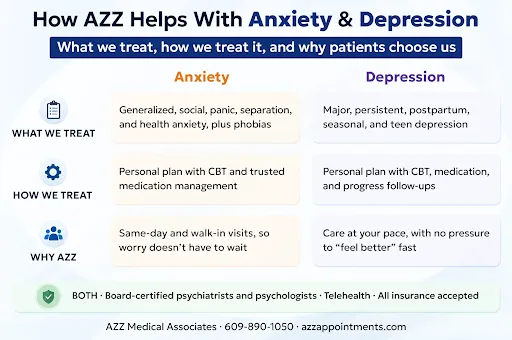
Anxiety is a sense of worry, nervousness, and fear. Everyone feels anxious sometimes, and that is normal. However, anxiety is considered a disorder if this state of worry or fear is constant, disproportionate to the situation, causes real distress, and impedes work, studies, and social life. Anxiety disorders include generalized anxiety disorder (GAD), panic disorder, social anxiety disorder, and specific phobias.
Key point: Anxiety care shouldn’t mean waiting weeks. AZZ offers same-day appointments with board-certified psychiatrists and psychologists, in person or by telehealth.
What Is Depression?
Depression is a mood disorder marked by a persistent low mood or loss of interest. Major depressive disorder, also known as clinical depression, is an illness characterized by symptoms that occur almost every day, usually for 2 weeks or more, as described by the NIMH. It impacts your emotions, thinking ability, eating habits, sleeping patterns, and performance of day-to-day tasks. A longer-lasting form, persistent depressive disorder, continues for 2 years or more in adults.
How Anxious and Depressive Thinking Differ
In general, anxious thinking tends to look ahead (“what if something goes wrong?”), while depressive thinking tends to turn inward or backward (“I always mess things up,” “nothing will get better”). Anxiety often brings avoidance of situations that feel threatening. Depression often brings withdrawal because things no longer feel worth the effort.
Dismissed as "Just Scattered" for Years?
That pattern has a name, and it’s treatable.
Signs and Symptoms of Anxiety vs Depression
Common Signs of Anxiety
- Inability to control excessive worrying
- Nervousness, being on edge, or getting keyed up
- Rapid heartbeat, sweating, shaking, or difficulty breathing
- Muscle tension, headaches, or abdominal distress
- Inability to fall asleep due to an inability to calm your mind
- Fatigue from exhaustion due to constant worrying
- Avoidance of people and places that provoke fear
Common Signs of Depression
Overlapping Symptoms
- Feeling sad, empty, or hopeless most of the time
- Decreased interest or pleasure in activities previously found to be enjoyable
- Fatigue, or decreased activity or slowed thinking processes
- Agitation, or restlessness, which is also a symptom of depression
- Alterations in eating and/or weight
- Excessive sleeping or insomnia
- Feeling guilty or worthless
- Ideas of death or suicide
Fatigue, restlessness, irritability, difficulty concentrating, and insomnia can occur with both disorders. This is the reason that a doctor assesses the overall picture rather than any single symptom.
Tip: Keep a simple two-week log of your mood, sleep, worry, and energy. Bringing it to your appointment helps your clinician spot patterns quickly.
What It Looks Like in Everyday Life
- Anxiety: you read your email five times before hitting send and then toss and turn because of that meeting you had.
- Depression: a favorite hobby no longer makes sense, and small tasks pile up.
- In both cases: you fear being behind on everything but are too exhausted to even start.
Can’t Tell If It’s Anxiety or Depression?
You don’t need the answer before you book. Our psychiatrists and psychologists will help you find it, in person or by telehealth.
Can You Have Anxiety and Depression at the Same Time?
Yes, and it is very prevalent. According to the Anxiety and Depression Association of America, almost one-half of individuals who have been diagnosed with depression have also received a diagnosis for an anxiety disorder.
The practical upside is that many treatments, including cognitive behavioral therapy (CBT) and certain antidepressants, can help with both.
What Causes Anxiety and Depression?
No clear cause has been found yet. According to NIMH, clinicians consider genetic, biological, psychological, and environmental factors in diagnosis. Risk factors associated with developing anxiety and depression include genetic predisposition, chronic stress, trauma or major losses, underlying medical conditions, and substance abuse. Women are twice as likely to be affected as men with GAD, according to ADAA.
Some physical health problems and substances can also cause symptoms that look like anxiety or depression. This is one reason a medical evaluation matters. A clinician may consider:
- Thyroid problems– hyperthyroidism causes rapid heartbeat and nervousness; hypothyroidism can cause lethargy and depression.
- Anemia or vitamin B12 deficiency – causes fatigue and poor concentration.
- Abnormal heart rhythms – palpitations can be seen as a symptom of panic attacks.
- Medications and substances – caffeine, decongestants, steroid medications, alcohol, and other drugs can cause anxiety and depression. Also, certain medications and drug withdrawal can produce similar effects.
- Sleep disorders – for example, if sleep apnea remains undiagnosed and untreated, it can cause fatigue and irritability during the day.
Could Something Physical Be Behind How You Feel?
AZZ providers review your medical history and current medications to rule out other causes before diagnosing you.
How Are Anxiety and Depression Diagnosed?
There is no single test for either condition. Instead, a primary care provider, psychiatrist, or psychologist takes time to understand what you’re going through by looking at:
- Your symptoms: what you feel, which came first, how long they have lasted, and how severe they are.
- Interference with daily function: impact on your work, school, sleep, relationships, and personal care.
- Questionnaire screening tool: usually the PHQ-9 questionnaire for depression and the GAD-7 questionnaire for anxiety. Both of these are validated screening tools and are scored based on your experience with symptoms in the past two weeks. Scores will show the severity of your condition and its progression over time, but they don’t provide a diagnosis on their own.
- Health history: current medications, substance intake, other health issues, and sometimes even blood tests for any possible physical disorders.
- History of your mood: before prescribing antidepressants, clinicians may want to know about any times when you’ve experienced unusually high levels of energy, lack of sleep, or elevated mood to ensure you don’t suffer from bipolar disorder.
- Safety check: questions about self-injurious thoughts so that you receive the right level of support.
- Follow-up: symptoms can be evolving, so clinicians will repeat the assessment during follow-up appointments.
All adults should be screened for depression, while adults aged below 65 years should be screened for anxiety disorders. The U.S. Preventive Services Task Force (USPSTF) recommends that clinicians screen all adults aged 19 to 64 for anxiety disorders, and all adults aged 19 and older (including those 65+) for major depressive disorder.
After the evaluation, your clinician will explain his findings and offer possible ways of addressing the problem. You can decide on what treatment to pursue. Follow-ups help your clinician to evaluate your reaction to treatment.
How Are Anxiety and Depression Treated?
Both conditions are treatable, and the options overlap a great deal.
- Psychotherapy: CBT works well for both problems. Exposure therapy is recommended for anxiety. Interpersonal therapy and behavioral activation have been extensively researched for depression.
- Medication: SSRIs and SNRIs are widely prescribed drugs for both disorders. Buspirone may be prescribed for anxiety. It takes a few weeks for antidepressants to work properly.
- Brain stimulation: In the case of depression, when the above treatment fails to provide relief, specialized centers may offer repetitive transcranial magnetic stimulation (rTMS) or electroconvulsive therapy (ECT). You will know from your doctor whether you need a referral or not.
- Daily habits: sleeping regularly, exercising, reducing consumption of alcohol and caffeine, and social interaction assist in recovery. As mentioned by NIMH, healthy behaviors are helpful but cannot substitute for treatment.
Key point: No need to find a therapist and a prescriber separately. AZZ connects you with board-certified psychologists for CBT and psychiatrists for medication management, so your care stays in one place, in person or by telehealth. |
When Should You Seek Professional Help?
Arrange for a consultation if you have been feeling anxious, depressed, or lethargic for more than two weeks, and this feeling keeps recurring and interferes with your ability to work, study, sleep, and relate socially. There is no need for you to identify your problem first.
Get help right away if you or someone you know:
- Is thinking about suicide
- Has a plan or has started taking steps toward self-harm
- Is at risk of harming someone else
- Cannot stay safe
Call or text 988 to reach the 988 Suicide & Crisis Lifeline, available 24/7. If someone is in immediate danger, call 911 or go to the nearest emergency room.
Anxiety and Depression Care in New Jersey
AZZ Medical Associates offers anxiety disorder treatment and depression treatment in multiple offices in New Jersey. Treatment will be provided by licensed professionals who are board-certified psychiatrists and psychologists and begins with an initial assessment, which includes PHQ-9 screening and medical history.
- In person or online: HIPAA-compliant telehealth visits are available anywhere in New Jersey.
- Coordinated care: Through our behavioral health program, your primary care and mental health providers work together.
- Fast access: Same-day and walk-in appointments are available, and all insurance plans are accepted.
Final Thoughts
Both anxiety and depression can vary in their presence depending on the season, stress levels, and other life events. Our board-certified psychologists and psychiatrists are just one call away, whether online or in-person.
Getting support sooner can make the path forward easier, and asking for help is a sign of self-awareness, not weakness. If parts of this guide felt familiar, AZZ Medical Associates is ready to listen. Call 609-890-1050 to take the first step.
Frequently Asked Questions
Which Insurance Plans Do You Accept?
AZZ Medical Associates accepts all insurance plans for anxiety and depression care. Our team verifies your plan and benefits before your first visit, so you know what’s covered before you start.
What's the quickest way to tell anxiety from depression?
Consider what your symptoms revolve around. If they consist mostly of fear and worry, then it may be anxiety. On the other hand, if they mostly consist of negative emotions and loss of interest, then it may be depression. Due to their overlap, it’s important to consult a physician.
Can anxiety cause depression?
They are highly related, and anxiety frequently precedes depression. Persistent anxiety and avoidance can cause one’s mood to deteriorate. However, being anxious does not automatically imply that depression will ensue, and vice versa.
Which is worse, anxiety or depression?
Neither is worse in general. Both range from mild to severe and can seriously affect daily life, and both respond well to treatment.
Can a blood test show anxiety or depression?
Neither condition can be diagnosed through blood tests. However, your physician may have you undergo blood tests in order to rule out physiological causes for both conditions.
Are the same medications used for Anxiety and Depression?
Often, yes. SSRIs and SNRIs are commonly used for both. Your prescriber will choose based on your symptoms, health history, and other medicines you take.
Where can I get anxiety and depression treatment in New Jersey?
AZZ Medical Associates treats anxiety and depression at 29+ clinic locations in New Jersey, including Ewing Township, Hamilton Township, Newark, Jersey City, Lakewood, and Holmdel, and through telehealth anywhere in the state.
Can I be treated through telehealth?
Yes. Many people are evaluated and treated for anxiety and depression through telehealth. AZZ Medical Associates offers secure audio/video telehealth visits for patients anywhere in New Jersey.