
Comprehensive Pulmonology Services in New Jersey
Breathing is something most people never think about until it becomes hard. A cough that won’t go away, getting winded on the stairs, or waking up gasping at night are signs your lungs need expert attention. Pulmonology is the medical specialty that diagnoses and treats conditions of the lungs, airways, and breathing during sleep.
AZZ Medical’s pulmonology services in NJ focus on accurate diagnosis, long-term management of chronic lung disease, and keeping you out of the emergency room. Our providers look at your symptoms, history, and test results together. That way, your treatment plan addresses what is actually driving your breathing problems. Care is coordinated with your primary care team, so medications, screenings, and follow-ups stay connected in one place.
When Every Breath Matters, Expert Care Makes the Difference
Living with a lung condition affects your sleep, your work, and the activities you enjoy. At AZZ Medical Associates, your breathing concerns are assessed by experienced providers who take time to understand how your symptoms affect daily life. We have been serving New Jersey communities since 2013.
Our team builds personalized care plans around your triggers, your lifestyle, and your long-term health goals. Diagnosis and treatment follow established national and international guidelines: GOLD for COPD, GINA for asthma, AASM criteria for sleep apnea testing, and USPSTF recommendations for lung cancer screening. Whether you choose in-person visits or telehealth follow-ups, AZZ pulmonary care stays within your reach.
Our Pulmonology Services
AZZ Medical offers a full range of pulmonary services designed to help you breathe easier and stay active:
COPD Management
Ongoing treatment for chronic bronchitis and emphysema to slow progression and prevent hospital visits.

Conditions We Manage in Pulmonology
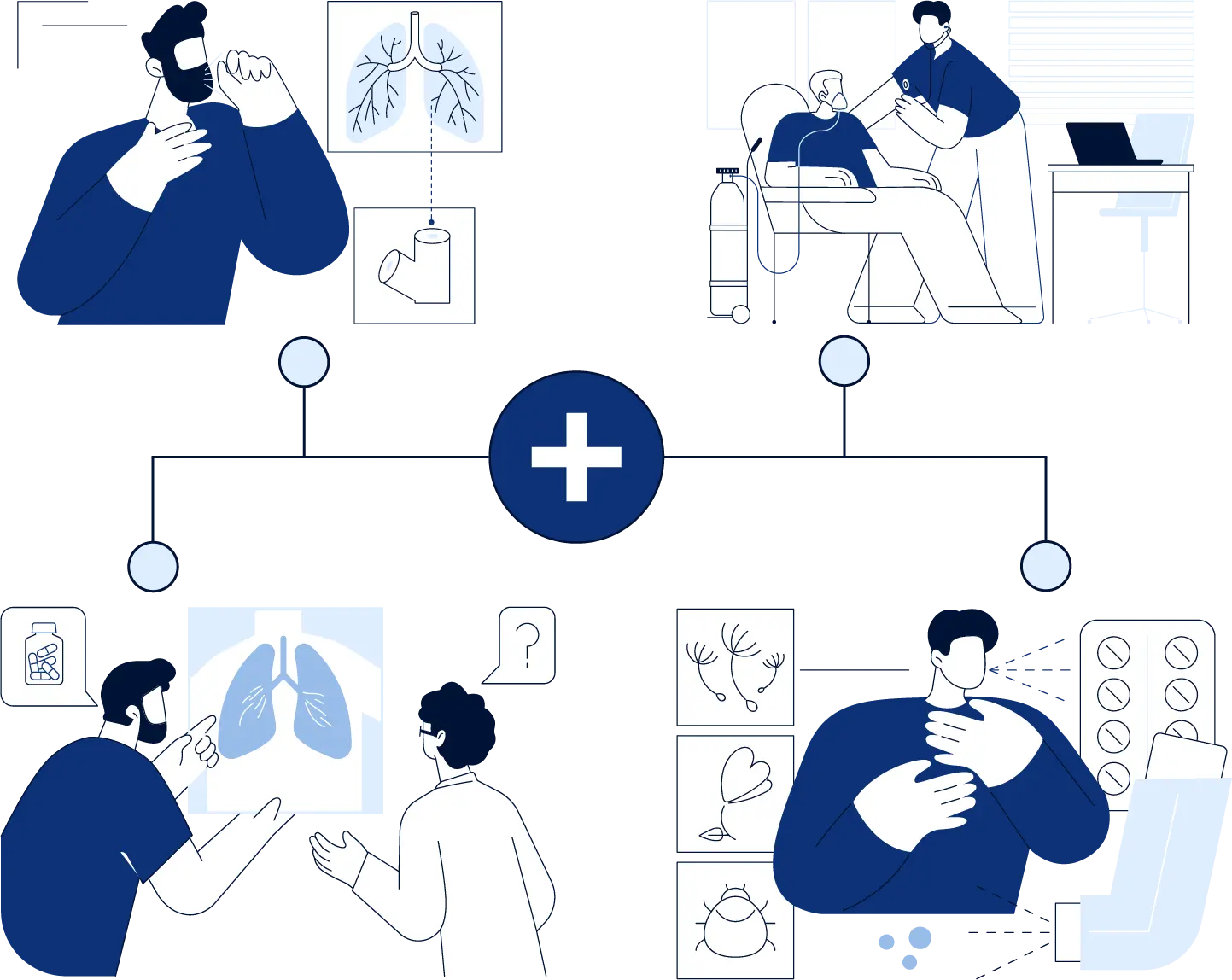
AZZ delivers pulmonary care for new breathing concerns and long-term lung conditions, including:
- Asthma (Allergic asthma, exercise-induced asthma)
- COPD (Chronic bronchitis, emphysema)
- Chronic Cough (Persistent dry or productive cough)
- Shortness of Breath (Persistent or recurring breathlessness)
- Sleep Disorders (Obstructive sleep apnea, loud snoring)
- Respiratory Infections (Lingering bronchitis, post-pneumonia recovery)
- Lung Nodules & Screening (Abnormal imaging, high-risk screening)
- Interstitial Lung Disease (Pulmonary fibrosis, lung scarring)
For sudden or severe difficulty breathing, chest pain, confusion, or blue or gray lips, call 911 immediately. Do not wait for a routine appointment.
Meet Our Pulmonology Provider in New Jersey

Mir Sharif Ahmad, MD

Why Choose AZZ Medical for Pulmonology in NJ?
With 30+ convenient New Jersey locations, our mission is to help patients breathe better, prevent flare-ups, and manage lung conditions before they become emergencies. If you’re looking for a pulmonary provider who listens and works with your primary care team, we’re here to help. Here’s why patients choose us:
- All insurance accepted
- Same-day appointments
- Telehealth Appointments
- In-person visit options
- Evidence-based treatment plans
- Personalized asthma and COPD action plans
- Ongoing follow-up for chronic lung conditions
- Strong focus on prevention and early detection
Book Your First Visit to Easier Breathing
Persistent or recurring breathing problems need evaluation, and early care can help with long-term management. From a nagging cough to a complex lung condition, AZZ Medical Associates’ care team walks beside you with experience, patience, and a clear plan. Your concerns are never rushed or overlooked. We listen, test when it matters, and focus on keeping your lungs as healthy as possible.
For your first visit, bring a list of current medications, including all inhalers, along with any prior chest X-rays, CT scans, or breathing test results. If symptoms come and go, a short log of when they happen and what seems to trigger them helps your provider reach an accurate diagnosis faster.
Find a Pulmonology Location Near You
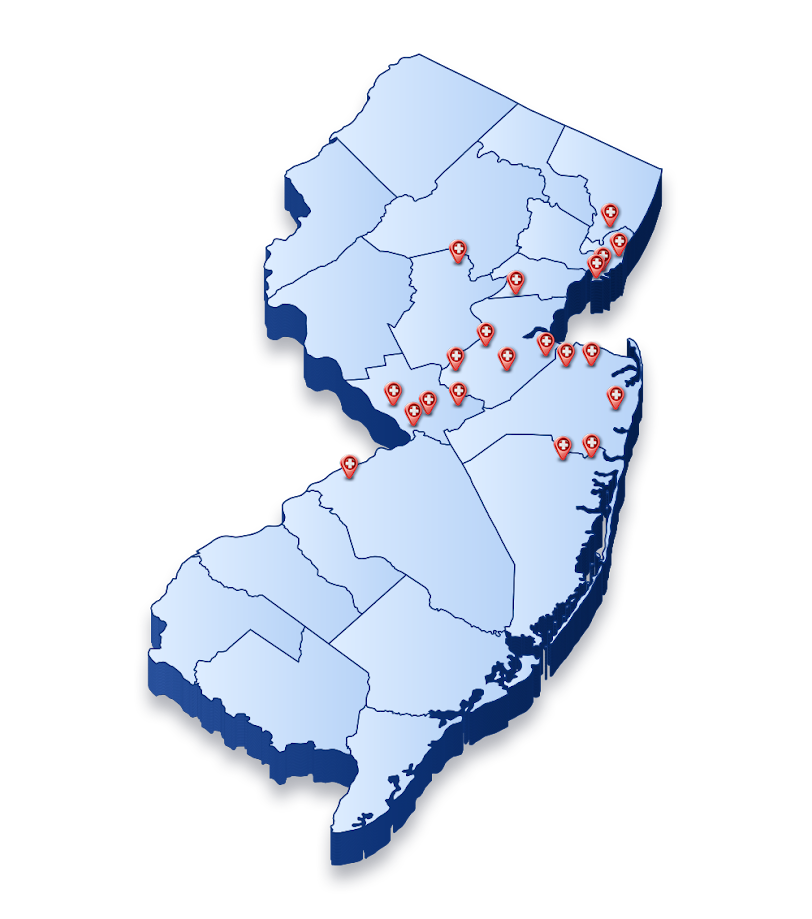
AZZ Medical makes it simple to access pulmonary care throughout New Jersey. With conveniently located clinics in Ewing, Hamilton Township, Brick Township, Matawan, Holmdel, South Plainfield, Newark, North Brunswick, Delran, Hasbrouck Heights, and Bayonne, expert care is close to home.
These locations span Mercer, Ocean, Monmouth, Middlesex, Essex, Burlington, Bergen, and Hudson counties, so most New Jersey residents can reach an AZZ Medical clinic within a short drive. For follow-up visits that don’t need testing, telehealth lets you check in with your provider from anywhere in New Jersey.
Your first pulmonary visit usually starts with a detailed conversation, not a test. Your provider asks when symptoms began, what makes them better or worse, and whether they appear at night, with exercise, or in certain environments. Expect questions about smoking or vaping history, past jobs, hobbies, home exposures like mold or pets, and any family history of lung disease.
Next comes a focused physical exam. Your provider listens for wheezing or crackles in the lungs and checks your oxygen level with a pulse oximeter. Depending on your symptoms, you may be sent for a chest X-ray, a CT scan, blood work such as an eosinophil count, or a six-minute walk test to see how your oxygen holds up during activity.
Most patients leave with a working diagnosis or a clear testing plan. You'll also get guidance on what to do if symptoms worsen before your next visit.
A cough that lingers after a cold, flu, or COVID-19 is common. Viral infections can leave the airways inflamed and oversensitive for three to eight weeks, a pattern called post-infectious cough. It usually fades on its own. A cough that continues past that window usually has another cause.
In adults with a normal chest X-ray, the most frequent causes are:
- Postnasal drip: Mucus from sinus or allergy problems irritates the throat.
- Cough-variant asthma: Asthma that shows up mainly as a dry cough, often at night.
- Acid reflux (GERD): Stomach contents irritate the airways, sometimes without heartburn.
- Blood pressure medicines: ACE inhibitors such as lisinopril cause a dry cough in some people.
Coughing up blood, unexplained weight loss, fever, or night sweats need prompt evaluation. Finding the true trigger matters, because cough syrups only mask the symptom while the underlying cause continues.
A normal pulse oximeter reading is reassuring, but it doesn't rule out a breathing problem. Many lung conditions, including early COPD and asthma between flare-ups, affect how easily air moves long before they lower oxygen levels.
Breathlessness with normal oxygen can also come from outside the lungs:
- Heart conditions: Heart failure or rhythm problems reduce how well blood is pumped.
- Anemia: Fewer red blood cells means less oxygen reaches your muscles.
- Deconditioning: Reduced fitness after illness, surgery, or long periods of inactivity.
- Anxiety and dysfunctional breathing: Fast, shallow breathing patterns that feel like air hunger.
Home pulse oximeters have limits, too. The FDA has noted they can be less accurate in people with darker skin tones, cold hands, or nail polish. Pairing breathing tests with a full symptom review gives a far more complete picture than a single fingertip number.
Yes. Adult-onset asthma is more common than many people realize, and it's often mistaken for repeated bronchitis or a cough that keeps coming back. It can appear for the first time in your 30s, 40s, or later, even if you never wheezed as a child.
Common triggers of asthma that starts in adulthood include:
- Workplace exposures: Cleaning chemicals, flour dust, paint fumes, and industrial vapors, known as occupational asthma.
- Respiratory infections: A severe viral illness can leave the airways more reactive for months.
- Hormonal changes: Some women develop asthma around pregnancy or menopause.
- Weight gain and reflux: Both are linked to new or harder-to-control asthma.
- Medication sensitivity: Aspirin and NSAIDs trigger symptoms in some adults with nasal polyps.
Adult-onset asthma tends to be more persistent than childhood asthma. Identifying your specific trigger early leads to a treatment plan that holds up long term.
Lung damage from COPD can't be undone, but its progression can be slowed significantly, and many patients breathe better once treatment is in place. The goal is to protect the lung function you still have.
The steps with the biggest impact are:
- Removing all smoke exposure: This includes secondhand smoke, wood stoves, and workplace fumes.
- Long-acting inhalers: LAMA and LABA bronchodilators keep the airways open throughout the day.
- Preventing flare-ups: Each exacerbation can cause a lasting drop in lung function, so early treatment of chest infections matters.
- Staying active: Regular movement keeps breathing muscles stronger and eases breathlessness.
- Oxygen therapy: Prescribed only when testing shows consistently low oxygen levels.
Every adult diagnosed with COPD should also be tested once for alpha-1 antitrypsin deficiency. This inherited condition can cause emphysema at a younger age, even in people who never smoked. A positive result changes treatment and prompts testing of family members.
Inhaler technique matters as much as the medicine inside. If the spray hits your tongue or the back of your throat instead of reaching your lungs, you get less benefit and may think the medication isn't working.
Each inhaler type needs a different breathing style:
- Metered-dose inhalers (MDI): A slow, steady breath in while pressing the canister, ideally through a spacer, followed by a 5 to 10 second breath hold.
- Dry powder inhalers (DPI): A fast, deep, forceful breath in, since your own inhalation releases the powder.
- Soft mist inhalers: A slow, deep breath while the mist releases.
A few habits help too. Rinse your mouth and spit after using a steroid inhaler to prevent oral thrush. Check the dose counter instead of shaking the canister to guess how much is left. Know which inhaler is your daily controller and which is your rescue inhaler, and bring them all to appointments so your technique can be checked.
Respiratory infections are the most common trigger of asthma attacks and COPD flare-ups. For people with chronic lung disease, a routine virus can lead to hospitalization. Staying current on vaccines is one of the simplest ways to protect your lungs.
Vaccines often recommended for adults with lung conditions include:
- Flu vaccine: Every year, ideally by the end of October, before flu season peaks.
- COVID-19 vaccine: An updated dose as recommended for your age and health status.
- Pneumococcal vaccine: Protects against the most common cause of bacterial pneumonia.
- RSV vaccine: Recommended for older adults and for some younger adults at higher risk, including those with chronic lung disease.
- Tdap: Protects against whooping cough, which can cause weeks of severe coughing.
Recommendations shift with age, prior doses, and updated public health guidance. Your provider can review your vaccine history and close any gaps during a routine visit.
E-cigarettes are not harmless. Vapor can irritate the airways, worsen asthma, and trigger coughing and wheezing. In 2019, a nationwide outbreak of severe lung injury called EVALI was linked mainly to vitamin E acetate in THC vaping products. The long-term effects of nicotine vaping are still being studied.
Your lungs begin healing soon after you stop smoking or vaping:
- Within 2 weeks to 3 months: Circulation and lung function begin to improve.
- Within 1 to 9 months: Coughing and shortness of breath ease as cilia, the tiny hairs that clear mucus, recover.
- Over the following years: Lung cancer risk drops steadily, and lung function declines more slowly.
Quitting is easier with support. FDA-approved options include nicotine replacement, varenicline, and bupropion, and pairing medication with counseling improves success rates. Calling 1-800-QUIT-NOW connects New Jersey residents to free quit coaching through the state quitline.
Struggling with CPAP is common in the first few weeks. Most problems can be fixed with small adjustments, so there's no need to give up on treatment.
Common fixes include:
- Mask style: Nasal pillows, nasal masks, and full-face masks fit differently, and the right style solves many leaks and pressure marks.
- Heated humidification: Reduces dry mouth, nasal congestion, and nosebleeds.
- Ramp and auto-adjusting settings: The ramp feature gradually increases pressure as you fall asleep. Auto-adjusting PAP devices adjust pressure during sleep within the prescribed range.
- Gradual practice: Wearing the mask while reading or watching TV builds comfort before sleep.
If CPAP still doesn't work, there are alternatives. Custom oral appliances move the lower jaw forward to keep the airway open. Positional therapy helps when apnea happens mainly while sleeping on your back. Hypoglossal nerve stimulation is an implanted option for selected patients. For adults with obesity, tirzepatide is FDA-approved to treat moderate to severe obstructive sleep apnea.