
Medically Reviewed by:
Thomas Ortiz, MD
Read more
Publish On:
Last Updated on
- September 28, 2026
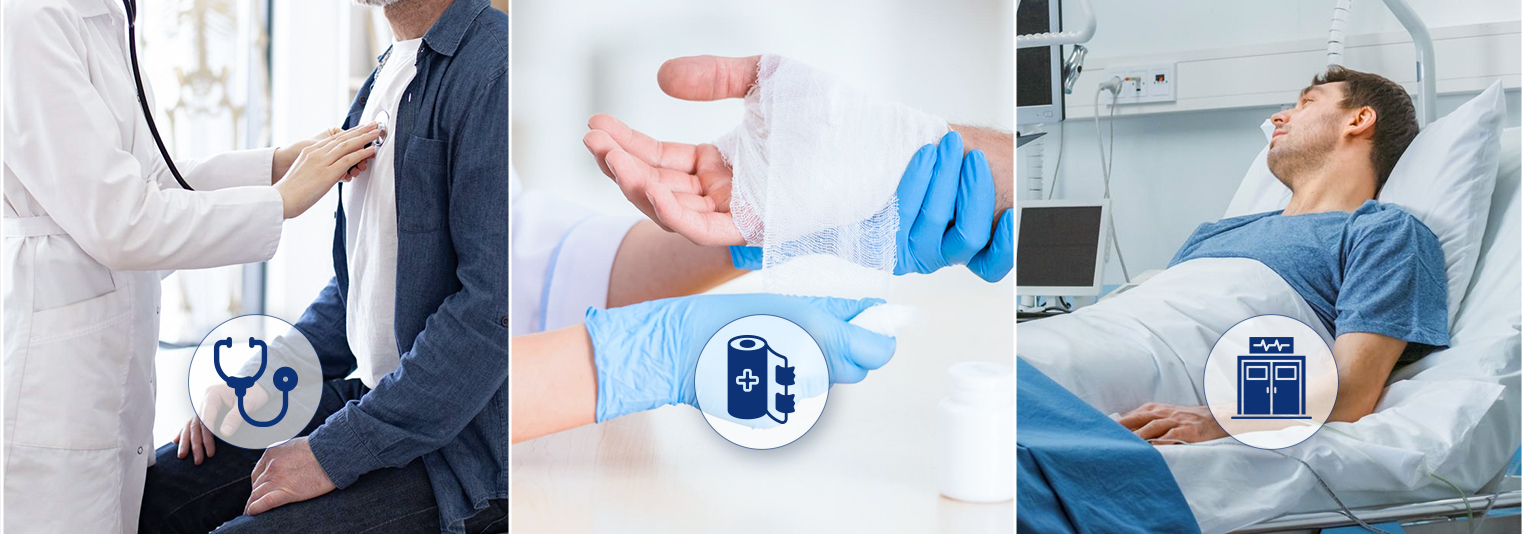
In this read, we will help you understand and decide which healthcare setting you should go with, using real-life issues and symptom examples.
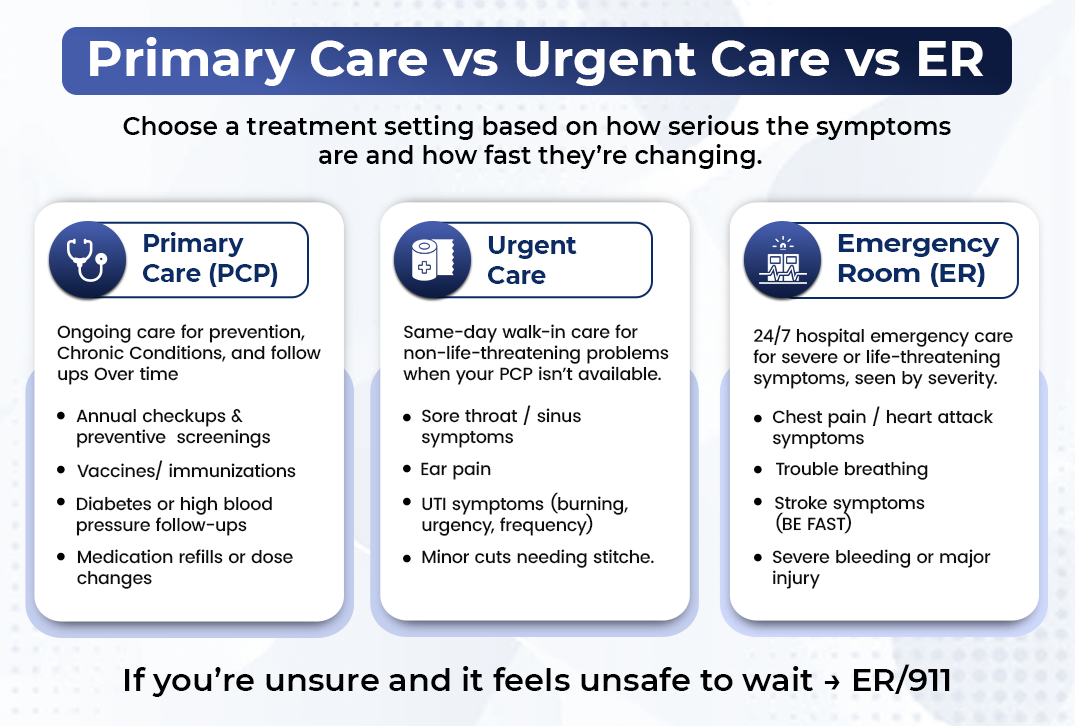
The 30-second Decision
Go to the Emergency Room (ER) when symptoms are sudden, intense, or getting worse fast, or when waiting isn’t felt safe. If it’s truly urgent and you’re unsure, call 911 or head to the nearest New Jersey emergency room.
Go to Urgent Care if your problem or condition needs immediate, short-term, same-day evaluation, but your condition is stable and not at risk of rapid escalation.
Start with Primary Care (PCP) for preventive care, chronic conditions, new but non-urgent concerns, and issues that require constant monitoring or long-term planning.
What is Primary Care
A primary care physician understands your medical history, monitors clinical changes over time, and orders appropriate laboratory tests and imaging. The primary care providers also adjust medications based on response and tolerance, and coordinate referrals. This is especially relevant when clinical findings indicate specialist evaluation. For NJ patients managing an ongoing condition, an established PCP who already knows your history is often the fastest and safest first call.
Common Reasons You Should Go to Primary Care
- Annual checkups
- Wellness visits
- Preventive screenings
- Vaccines and immunizations
- Medication refills and dose changes
- Management of chronic conditions (diabetes, high blood pressure, high cholesterol, long-term allergies)
Symptoms You Should Not Ignore
- Sore throat
- Coughs and congestion
- Flu
- Insect bites
- Weight changes
- Headaches
- Fatigue
Avoid the ER Wait for Minor Health Issues
Urgent Care
Urgent care offers convenient access to medical providers when non-life-threatening illnesses, diseases, conditions, or injuries need attention sooner than a scheduled appointment. The clinics of AZZ Medical Associates across New Jersey accept walk-in appointments, same-day appointments, and often stay open on weekends and even on holidays, giving NJ patients a practical alternative to a long ER wait.
Common Urgent Care Visits
- Sore throat
- Sinus congestion or facial pressure
- Ear pain
- Fever without high-risk features
- Urinary tract symptoms (dysuria, frequency, urgency)
- Localized allergic reactions (rash without airway involvement)
- Insect stings without systemic symptoms
- Sexually transmitted infections (STIs)
- Minor burns
- Uncomplicated skin infections
- Acute rashes
- Sprains and strains
- Minor cuts requiring stitches
- Suspected uncomplicated fractures
Age Note (Kids)
Many urgent care clinics see children 12 months and older for stable problems. For infants, don’t use urgent care for high-risk symptoms like trouble breathing, blue or gray lips, seizures, unresponsiveness, and severe dehydration. Go to the ER or call 911.
Urgent Care for Today, Primary Care for Tomorrow
When to Go to Emergency Room
Common ER-Related Problems
- Severe chest pain
- Heart attack symptoms
- Loss of consciousness
- Seizure
- Sudden confusion or major mental status change
- Stroke
- Open fractures or severe deformity
- Severe trauma
- Uncontrollable bleeding
- Deep wounds
- Severe burns
- Trouble breathing
- Severe abdominal pain
- Overdose or poisoning
- Severe allergic reaction (anaphylaxis)
- Mental health crisis, like harm to oneself or others
Turn Symptoms Into a Clear Next Step
From a simple cold to an urgent injury, AZZ Medical Associates offers clear instructions on when to seek primary care, urgent care, or the ER; and avoid unnecessary delay in treatment.
Symptom-based Guide
How to use this Guide
Start with how hard it is to breathe, how intense the pain is, and whether symptoms are getting worse.
- ER or call 911 for breathing trouble, stroke or heart attack symptoms, seizures, fainting or unresponsiveness, severe dehydration, uncontrolled bleeding, or major injury.
- Primary care is when the problem is manageable, and you need a plan (testing, prescriptions, refills, follow-up, referrals).
- Urgent care when you can’t wait for an appointment, but you’re not in danger (same-day illness or minor injury).
- If symptoms worsen quickly or you feel something is seriously wrong, skip the “wait and see” and go to the ER.
Cold/Flu Symptoms (fever, sore throat, congestion, cough)
- Primary care (first choice)
- Urgent care (if you can’t get seen soon)
Ear Pain / "Pink eye" (conjunctivitis)
- Primary care or urgent care
UTI Symptoms (burning, urgency, frequency)
- Primary care or urgent care
Rash, Hives, Poison ivy, Insect bite
- Primary care or urgent care (most cases)
Sprain/Strain, Lower Back Pain
- Primary care or urgent care (stable pain, stable walking)
Cuts/Minor Burns
- Urgent care (typical)
Broken Bones & Open Fractures
- Urgent care or ER, depending on severity.
Abdominal Pain
- Mild or stable: Primary care or urgent care
- Severe, sudden, or worsening: ER
Get Help Symptoms You Should Not Wait On
Anaphylaxis (Severe Allergic Reaction)
Symptoms:
Trouble breathing
Vomiting
Widespread hives or swelling
Throat tightness
Rapid heartbeat
Note: Even after using epinephrine (EpiPen), emergency evaluation is still necessary.
Diabetic Emergency
Symptoms:
- Confusion
- Extreme drowsiness or inability to stay awake
- Passing out
- Persistent vomiting
- Inability to keep fluids down
- Warning signs: Blood sugar below 60 mg/dL or a meter reading showing “HI.
Heart Attack Symptoms
- Chest pressure, tightness, or squeezing
- Pain radiating into the neck, shoulders, arms, jaw, or back
- Cold sweats, nausea, shortness of breath
Stroke Symptoms (Use the BE FAST acronym)
- Balance: Dizziness or loss of coordination
- Eyes: Vision loss or double vision
- Face: Drooping or asymmetry
- Arm: Weakness or inability to lift
- Speech: Slurred speech, confusion, or difficulty forming words
- Time: Act immediately. The quicker the response, the better the outcome.
Get Treatment Faster by Choosing the Right Channel
Overdose or Poisoning
- Breathing problems
- Seizures or tremors
- Unconsciousness
- Severe hallucinations
- Vomiting
Practical step: If possible, identify what was taken (prescription, over-the-counter drugs, or illegal substances), as containers or substances can help clinicians treat the condition effectively. In New Jersey, you can also call Poison Control at 1-800-222-1222 for 24/7 guidance.
Mental Health Crisis
Examples:
- Suicidal thoughts or attempts
- Self-harm or threats to others
- Severe hallucinations, delusions, mania, or paranoia
- Severe OCD symptoms leading to a risk of harm
Infants and High-Risk Patients
- Infants with fever, especially those under 2 months old, need immediate evaluation.
- Older adults after a bad fall also require emergency assessment due to a higher risk of internal injury, fractures, or complications.
How AZZ Medical Associates Can Help You
At AZZ Medical Associates, we are committed to delivering the best care possible for patients across New Jersey, whether you need routine medical visits or urgent care services. Here is why NJ patients trust us:
- All insurance plans are accepted in NJ
- No wait time in appointments
- Appointments within 24 hours
- Weekend appointments
- Walk-in appointments
- 27+ locations across New Jersey & expanding
- Personalized care for every patient
- Strong focus on prevention and wellness
- Comprehensive primary care services
- Experienced primary care providers
- HIPAA-compliant telehealth
- Outpatient healthcare clinics
- Mental health screening
Takeaways
Healthcare needs can arise anytime, and whether they are minor or threatening, it is important to know which healthcare setting you should choose in the moment for the most effective treatment.
Acting early and seeking medical care promptly ensures that minor issues don’t escalate into serious health concerns. AZZ Medical Associates offers comprehensive, patient-centered care to manage and prevent primary and urgent care needs for families throughout New Jersey.
We understand that a patient might not be able to reach a medical facility immediately. That is why we offer HIPAA-compliant telehealth appointments across NJ, so you can get medical assistance right when you need it, all while being in the comfort of your home.
Frequently Asked Questions
How do I decide between urgent care and the ER in the moment?
Ask two questions: how severe is this, and how fast is it getting worse? Symptoms that are sudden, intense, or escalating, like chest pain, trouble breathing, or signs of stroke, belong in the ER or a 911 call. Stable problems that simply cannot wait for a scheduled appointment, like an ear infection or a minor sprain, fit urgent care.
Is urgent care cheaper than the emergency room?
Yes, usually by a wide margin. An urgent care visit in New Jersey typically costs a fraction of an ER visit for the same minor condition, and copays are generally lower under most insurance plans. The ER is priced for life-threatening emergencies, which is exactly what it should be reserved for.
Will I be seen faster at urgent care than at the ER?
For minor conditions, almost always. ERs treat patients by severity, not arrival order, so a non-emergency complaint can wait hours behind critical cases. Urgent care and same-day primary care visits usually move much faster for stable problems.
Can my primary care doctor handle same-day sick visits?
Often yes, and it is worth calling before defaulting to urgent care. Many New Jersey practices, including AZZ Medical Associates, hold same-day and walk-in slots, and your own PCP has your history, medications, and past results in front of them, which urgent care does not.
When should I call 911 instead of driving to the ER?
Call 911 for possible heart attack or stroke, severe breathing trouble, uncontrolled bleeding, seizures, or loss of consciousness. Paramedics begin treatment on arrival and hospitals prepare before you get there, which driving yourself cannot do. Never drive yourself if you feel faint or your symptoms are worsening quickly.
Where should I take my child: pediatrician, urgent care, or ER?
Start with your pediatrician or family provider for stable illnesses; many urgent care clinics also see children 12 months and older. Go straight to the ER for any infant under 2 months with a fever, or any child with trouble breathing, blue or gray lips, a seizure, unresponsiveness, or severe dehydration.
Does insurance cover urgent care and ER visits in New Jersey?
Most NJ plans, including Medicare, Medicaid, and NJ FamilyCare, cover all three settings, but cost-sharing differs, and ER visits for non-emergencies can carry the highest out-of-pocket burden. Check your plan's copay structure, and remember emergency care cannot be denied based on ability to pay.
Can telehealth replace an urgent care visit?
For many concerns, yes. Rashes, medication questions, mild infections, and follow-ups often resolve in a virtual visit, and New Jersey law requires most plans to cover telehealth on par with in-person care. A good telehealth provider will tell you honestly when your symptoms need hands-on examination instead.
What happens after an ER or urgent care visit?
Follow-up is where recovery actually gets managed, and it belongs with your primary care provider. Book a PCP visit within a few days so your regular doctor can review the records, reconcile any new medications, and catch complications early rather than at the next emergency.
What if I choose wrong and go to the wrong place?
Nothing bad happens except possibly time and money. Urgent care will send you to the ER if your condition is beyond their scope, and the ER will treat you regardless. When you are genuinely unsure and symptoms feel serious, choose the higher level of care; no one will fault you for caution.