

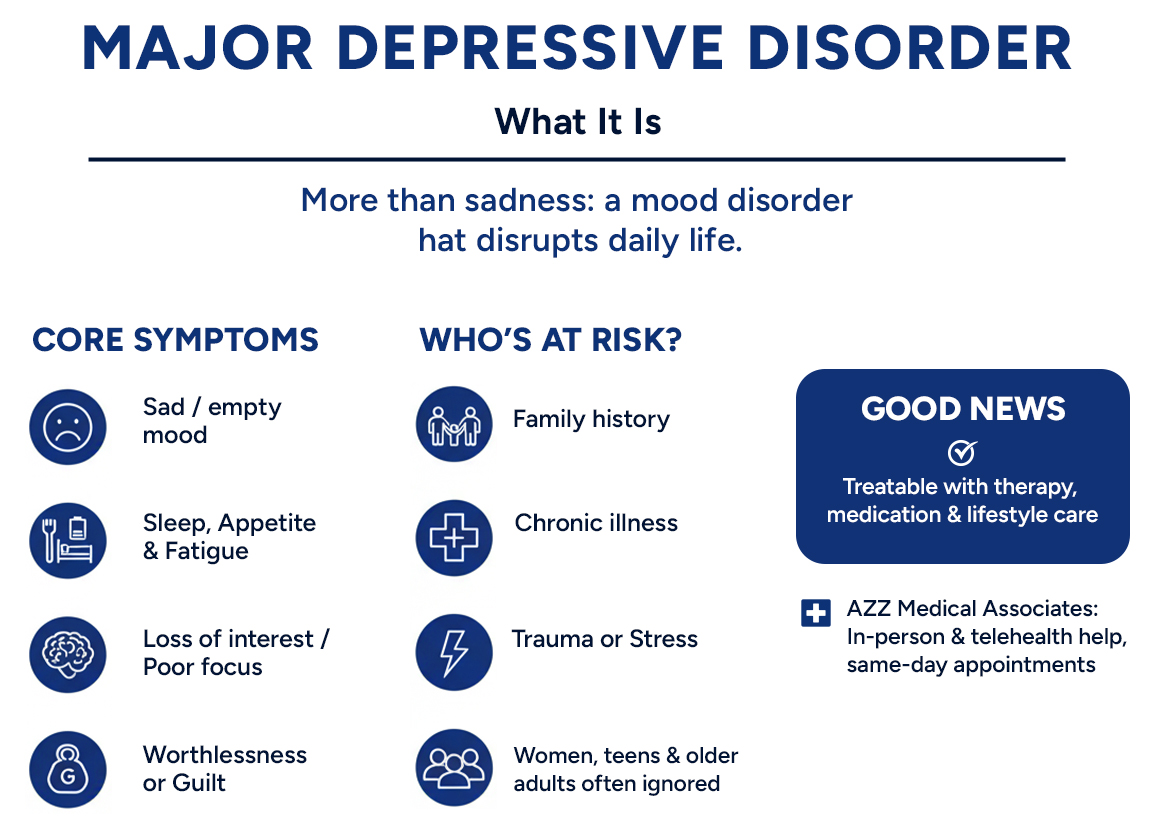
Major Depressive Disorder (MDD) is a mood disorder marked by a persistently low or empty mood and loss of interest or pleasure. It changes how people feel, think, sleep, eat, move, and function. Episodes often last weeks to months and can recur throughout life. It isn’t a character flaw, and you can’t “snap out of it.” With the right plan and expert help of psychotherapy, medication, or both, symptoms will fade away.
AZZ Medical Associates offers professional evaluations and ongoing care in-clinic and by telehealth (video visits) throughout New Jersey.
Comprehensive Depression Care, Anywhere in NJ
Major Depressive Disorder Symptoms
- Sad, empty, or hopeless mood; in youth, irritability may dominate
- Marked loss of interest or pleasure
- Sleep disturbance: insomnia or hypersomnia
- Appetite/weight change (up or down)
- Fatigue or loss of energy
- Psychomotor agitation (restless, keyed up) or slowing of speech/thinking/movement
- Feelings of worthlessness or excessive guilt
- Difficulty concentrating, remembering, or making decisions
- Thoughts of death, suicidal thinking, or attempts
- Physical complaints without clear cause (e.g., headaches, back pain)
Children & teens: More aches, clinginess, school refusal, irritability, substance use, or self-harm.
Expert Insights
Why It Happens: Biology, Development, and Stress
- Brain circuits & chemistry: changes in neural networks involved in mood regulation can secondarily disrupt neurotransmitters (serotonin, norepinephrine, dopamine).
- Genetics: first-degree relatives raise risk; you can still develop MDD without family history.
- Hormones & medical issues: thyroid disease, postpartum changes, perimenopause; chronic illnesses (heart disease, stroke, COPD, diabetes) can worsen or be worsened by depression.
- Adverse childhood experiences (ACEs) and stressful life events (loss, trauma, isolation) can trigger episodes in susceptible people.
Get Same-Day Help for Major Depression
Don’t wait weeks to start care. With same-day appointments available across 27+ New Jersey locations and through secure telehealth, AZZ Medical Associates ensures you receive timely support for major depressive disorder symptoms, medication management, and follow-up care all in one place.
How MDD Is Diagnosed (What to Expect)
- Physical exam & history: review sleep, pain, medical conditions, and medications; depression can co-occur with conditions like cancer, coronary disease, and chronic pain.
- Lab tests (as indicated): thyroid panel, CBC, B-12/folate, or others to rule out contributors.
- Psychiatric evaluation: timing, severity, impact, risk, and co-occurring disorders (anxiety, OCD, substance use). Brief self-report questionnaires may be used.
- DSM-5 criteria for Major Depressive Disorder: ≥5 symptoms for ≥2 weeks, including either low mood or loss of interest, with functional impairment, and no history of mania/hypomania (otherwise considered bipolar disorder).
ICD-10 coding (for documentation/insurance): - Single episode: F32.x (e.g., mild F32.0, moderate F32.1, severe F32.2/3, with psychotic features when present)
- Recurrent: F33.x (e.g., major depressive disorder recurrent mild/moderate/severe; recurrent moderate is F33.1)
AZZ clinicians explain findings in plain language and differentiate persistent depressive disorder vs. major depressive disorder (dysthymia is longer-lasting, typically milder but more chronic).
Types & Specifiers That Shape Care
- With anxious distress
- With mixed features
- Melancholic
- Atypical (mood reactivity, increased sleep/appetite, rejection sensitivity)
- With psychotic features (delusions/hallucinations)
- With catatonia
- Peripartum onset (prenatal/postpartum)
- Seasonal pattern
These elements guide major depressive disorder treatments and medication choices. AZZ also screens for related diagnoses (bipolar I/II, cyclothymia, disruptive mood dysregulation in youth, premenstrual dysphoric disorder, substance-/medication-induced depression).
Treatment for Major Depressive Disorder
Most people do best with a combined plan, therapy + medication, adjusted over time.
Psychotherapies (Major Depressive Disorder Therapies)
- Cognitive Behavioral Therapy (CBT): identifies and tests negative thoughts, rebuilds routine, and problem-solving.
- Interpersonal Therapy (IPT): focuses on grief, role transitions, and relationship patterns.
- Behavioral Activation: stepwise return to meaningful activities to counter withdrawal.
- Problem-Solving & Brief Supportive Therapy: practical coping.
Therapy is available in person or via teletherapy/telehealth anywhere in New Jersey, easy to schedule around work, school, or caregiving.
Medications (Major Depressive Disorder Medication)
Your prescriber reviews benefits, side effects, and timelines (expect 2–6 weeks for a fair trial):
- SSRIs: sertraline, escitalopram, fluoxetine, paroxetine, citalopram, vilazodone
- SNRIs: venlafaxine, desvenlafaxine, duloxetine, levomilnacipran
- Atypicals: bupropion, mirtazapine, vortioxetine, trazodone, nefazodone
- TCAs and MAOIs: effective niche options with added monitoring/dietary rules
- Augmentation: add a second antidepressant, lithium/mood stabilizer, or an atypical antipsychotic for major depressive disorder with psychotic features or partial response
- Safety: don’t stop suddenly; discuss pregnancy/breastfeeding plans; close follow-up is standard at AZZ via HIPAA-compliant video or local visits.
Did You Know
- Up to 90% of people with depression improve with proper treatment.
- Telepsychiatry is proven as effective as in-person care for managing depression.
Advanced & Somatic Options
For severe or treatment-resistant episodes or when rapid relief is needed:
- Transcranial Magnetic Stimulation (TMS): noninvasive outpatient neuromodulation
- Electroconvulsive Therapy (ECT): most effective for psychotic, catatonic, or life-threatening depression
- Esketamine/Ketamine: for resistant depression under strict protocols
- Vagus Nerve Stimulation (VNS): for select, long-standing cases
Prognosis, Prevention & Relapse Planning
- MDD is common (lifetime risk roughly 5–17%) and highly treatable; most patients respond to evidence-based care.
- Untreated episodes can last 6–12 months and raise risks for anxiety disorders, substance use, and worsening of medical illnesses.
- Relapse prevention: continue therapy skills, take medications as prescribed, schedule maintenance visits, know your early warning signs (sleep shift, isolation, rising guilt/hopelessness), and reconnect with your AZZ team quickly, by video or at a nearby clinic.
Self-Care That Supports Recovery
These steps support treatment (they don’t replace it):
- Consistent sleep and wake times; limit alcohol and sedatives
- Regular physical activity (even brief daily walks)
- Balanced meals; address pain and medical conditions with your primary care clinician
- Social connection; short, scheduled touchpoints help
- Mind-body practices: relaxation training, yoga/tai chi, or brief meditation
- Break tasks into small steps; delay major life decisions until mood improves
When to Seek Help & Emergency Resources
Reach out if low mood, loss of interest, sleep/appetite changes, fatigue, or cognitive fog persist beyond two weeks, or sooner if symptoms interfere with work, school, caregiving, or relationships. AZZ Medical Associates offers same-day and evening appointments in 27+ New Jersey locations, as well as via telehealth.
Take the First Step Toward Authentic Relief
Final Words
Whether you prefer a near-me office visit or a private video session from home, AZZ Medical Associates provides comprehensive care for Major Depressive Disorder: DSM-5–aligned diagnosis, medication management, CBT/IPT/behavioral activation, and relapse prevention.
We coordinate closely with New Jersey primary care and specialty teams, offering flexible, patient-centered scheduling across 27+ locations and telepsychiatry services.