

What Is Postpartum Anxiety?
Postpartum anxiety is linked with constant nervousness, excessive fears about things that might not even happen. You might have intrusive thoughts, experience sleep changes, or physical symptoms like a fast heartbeat or shortness of breath. Studies found that anxiety affects 1 in 5 women during pregnancy and after delivery.
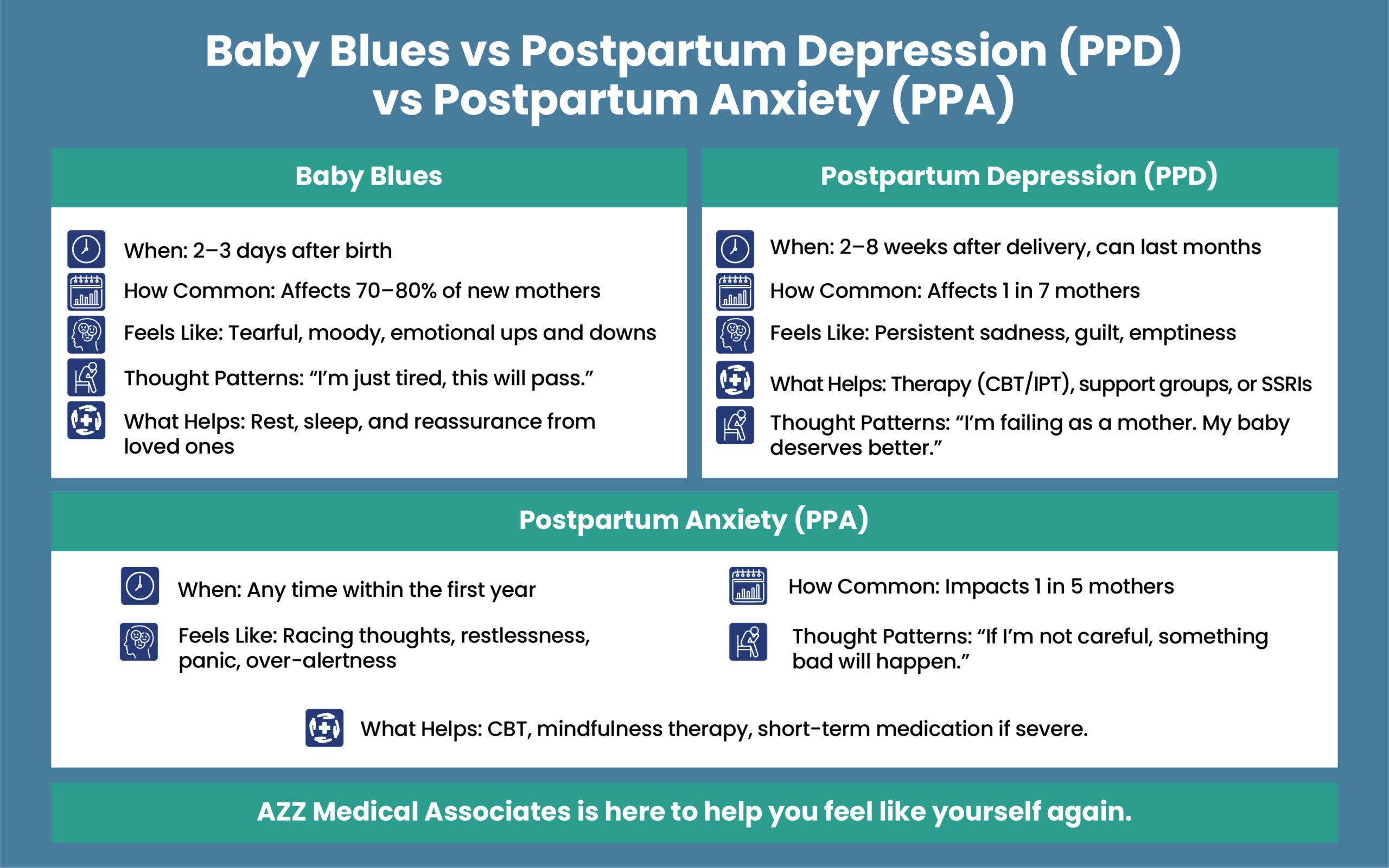
Postpartum Anxiety vs. Postpartum Depression vs. Baby Blues
| Baby blues | Postpartum anxiety (PPA) | Postpartum depression (PPD) | |
| How common | Up to about 80% of new mothers | About 1 in 5 mothers | About 1 in 7 mothers |
| When it starts | First few days after birth | During pregnancy or any time in the first year | Weeks to a year after birth |
| What it feels like | Mild mood swings, tearfulness, tiredness | Constant worry, fear, intrusive thoughts, racing heart, muscle tension | Persistent sadness, low mood, loss of interest, hopelessness, often with anxiety |
| How long it lasts | Usually eases within about 2 weeks | Can persist without treatment | Can persist without treatment |
| Does it need treatment? | Usually not; rest and support help | Yes, if it disrupts sleep, eating, or bonding | Yes, therapy and/or medication |
You Don’t Have to Go Through This Alone
Types of Postpartum Anxiety Disorders
- Perinatal Generalized Anxiety Disorder (GAD)
It is a constant worry about things like a baby’s health, your ability as a parent, or about small/simple daily tasks. It makes it hard for you to rest properly with mental peace. The prevalence of Postpartum GAD is between 8.5% and 10.5%. - Postpartum Panic Disorder
This condition involves extreme fear that can occur without warning. You might feel chest pain, a fast heartbeat, or dizziness (almost like a heart attack). It lasts a few minutes to an hour. - Postpartum Obsessive-Compulsive Disorder (OCD)
Postpartum OCD causes unwanted thoughts about your baby’s safety. In response, you may frequently check or clean your baby. Around 16.9% of new mothers experience Postpartum OCD.
When Does It Start & How Long Can It Last?
Postpartum anxiety does not always resolve spontaneously. One meta-analysis found anxiety symptoms in 15.2% of women in the first 6 months postpartum.
Another study found that more than 30% of women self-reported postnatal anxiety symptoms up to one year postpartum.
You Deserve Peace, Not Pressure
Postpartum Anxiety Symptoms
Physical Symptoms
- Nausea
- Hyperventilation
- Chest pain
- Trouble sleeping in peace (even when the baby is sleeping)
- Dizziness
- Night Sweats
- Muscle tension
Emotional/Cognitive symptoms
- Unable to fully relax
- Irritability
- Overthinking
- A feeling that nothing is “safe enough”
- Persistent worry about the baby’s health & safety
- Intrusive thoughts (e.g., “What if I leave the baby and something bad happens?”)
Behavioural Symptoms
- Avoiding situations in which the mother has to leave the baby with someone
- Constantly monitoring and checking the baby
- Avoidance of social outings
- In more severe cases, panic attacks
Night-Time Specific Triggers
Causes and Risk Factors of Postpartum Anxiety
- Family History of Complications: History of immature birth, post-birth death, or history of miscarriages in the mother or in the siblings of the other can greatly contribute to the development of postpartum anxiety in the mother.
- Hormonal fluctuation: After delivery, there is a big drop in estrogen and progesterone in a woman’s body. This sudden change can increase mood change and stress.
- Sleep deprivation: Newborn babies need care continuously. A mother might stay up all night to take care of the baby. This lack of sleep can magnify anxiety.
- Previous psychiatric history: A mother with a history of anxiety, depression, or trauma is at higher risk.
- Stressful or traumatic birth: Emergency C-section delivery or NICU admission can also increase the risk of postpartum anxiety.
- Social determinants: Low income, intimate partner violence, and limited education can increase vulnerability.
- Unplanned pregnancy or fertility treatment: Both are cited as situational triggers that can pose a higher risk for perinatal depression.
Do Your Anxious Thoughts Feel Out of Your Control?
Diagnosis and Screening
There is no DSM-5 specifier for postpartum anxiety. Clinicians diagnose it by using the criteria for Generalized Anxiety Disorder (GAD) during the postpartum period.
- Generalized Anxiety Disorder-7 for generalized anxiety severity.
- Edinburgh Postnatal Depression Scale – for perinatal anxiety symptoms.
- Perinatal Anxiety Screening Scale (PASS) for anxiety specific to pregnancy and postpartum.
Treatment and Management
Cognitive Behavioral Therapy (CBT)
CBT is considered the gold standard of therapy and remains the first-line treatment option for the treatment of mild to moderate postpartum anxiety. In CBT sessions, your therapist will help you learn techniques to identify negative thoughts and replace them with positive ones.
Exposure and Response Prevention (ERP)
It gently exposes mothers to the unwanted scenarios that are triggering them while also helping them not to perform the compulsive behavior, like rechecking or washing their baby. Studies have shown that ERP is the gold-standard therapy for postpartum OCD.
Mindfulness and Relaxation Techniques
Research supports that mindfulness-based interventions (meditation practices) help mothers reduce the symptoms of perinatal anxiety effectively.
SSRIs (Selective Serotonin Reuptake Inhibitors)
SSRIs help maintain serotonin in your brain. A chemical that is involved in mood stability and calmness. They are first-line medications for perinatal anxiety/depression. Sertraline is often preferred for breastfeeding mothers because chemical exposure through milk is very low.
- Sertraline (Zoloft)
- Paroxetine (Paxil)
SNRIs (Serotonin-Norepinephrine Reuptake Inhibitors)
- Venlafaxine (Effexor XR)
Benzodiazepines (short-term only)
- Lorazepam (Ativan)
- Clonazepam (Klonopin)
You Don’t Have to Keep Pretending You’re Okay
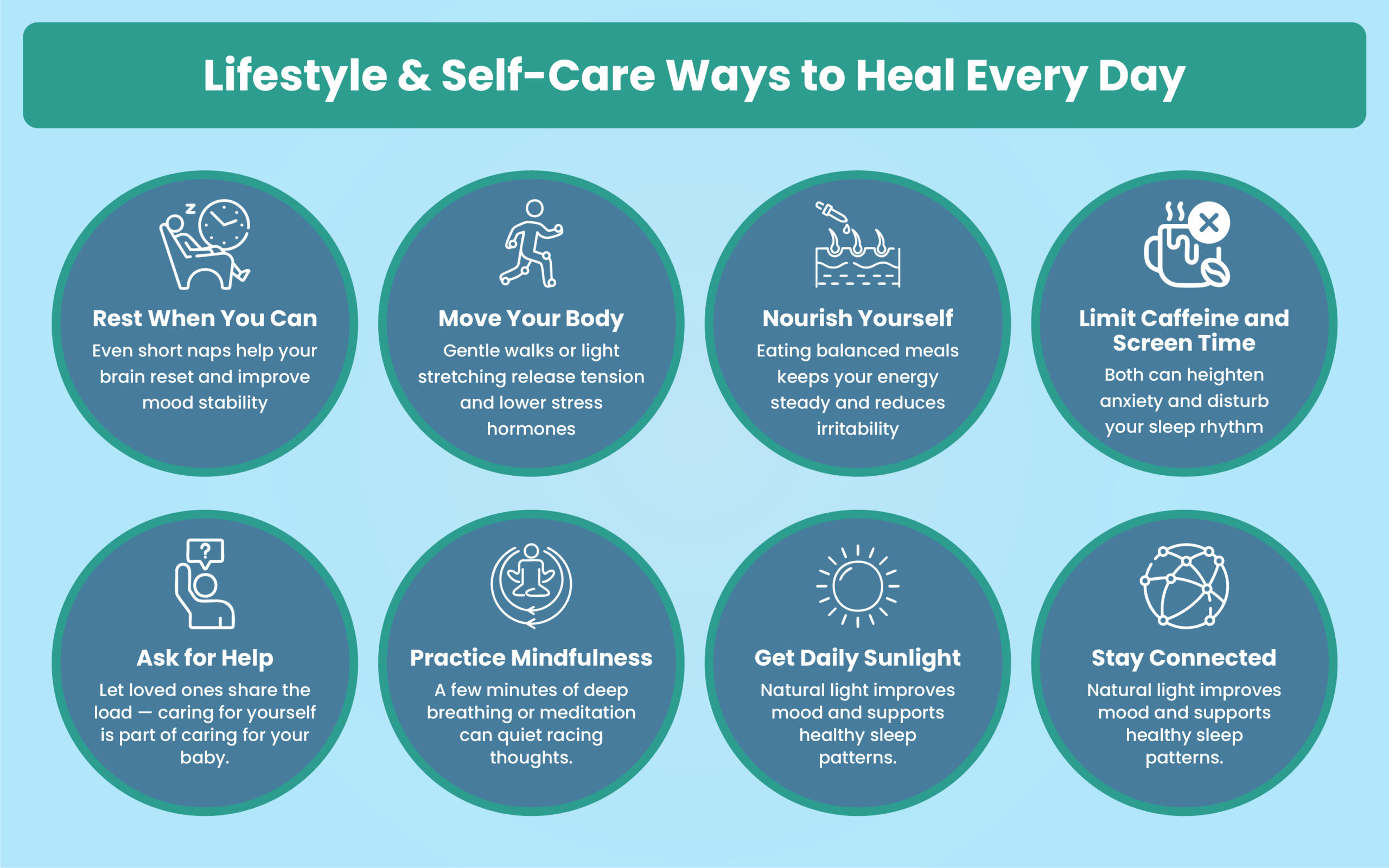
Lifestyle and Self-Care Ways to Heal Every Day
- Rest whenever possible: When you think your body and mind need relief, take a rest. Even short naps.
- Keep on moving: Morning walks will help you clear your mind, and even a light yoga can help lower your stress hormones.
- Eat balanced meals: Healthy and nutritious foods keep blood sugar levels in control, which can help you improve focus.
- Reduce screen time: Late-night scrolling can make you restless and might interfere with sleep.
- Ask for help: If you are struggling to manage emotions and the baby, ask for help from your partner or family members.
- Take time for yourself: Take a warm shower, journaling can also help clear your mind and thinking.
Why Choose AZZ for Postpartum Anxiety Treatment
AZZ Medical Associates personalized care is guided by medical health providers who understand the emotional depth of new motherhood, especially when it is the first time.
- All insurance accepted
- Same-day appointments
- HIPAA-compliant telepsychiatry
- Walk-in appointments
- Board-certified psychiatrists
- Comprehensive postpartum evaluation
- Therapy designed for mothers
- Safe medication management
- 21+ accessible locations in New Jersey
Final Words
You’re not weak; if you are struggling with it, reach out. At AZZ Medical Associates, we stand with you. Our board-certified mental health providers offer comprehensive treatments, including medication, therapies like CBT, ERP, with mindfulness and relaxation techniques.
Your Healing Story Starts Here
Postpartum Anxiety FAQs
What does PPA stand for?
PPA stands for postpartum anxiety, which is excessive worry or fear that develops during pregnancy or in the first year after childbirth.
What is the difference between PPA and PPD?
PPA (postpartum anxiety) centers on constant worry, fear, and physical tension. PPD (postpartum depression) centers on lasting sadness, low mood, and loss of interest. They often occur together and can be treated at the same time.
Is postpartum anxiety normal?
Some worry is expected for any new parent. It may be postpartum anxiety when the worry is constant, feels out of your control, and interferes with sleep, eating, or bonding for more than two weeks.
When does postpartum anxiety start?
It can begin during pregnancy, right after delivery, or several months later, sometimes when your baby is already a few months old.
How long does postpartum anxiety last?
There is no fixed timeline. With support and treatment, many mothers improve within weeks to a few months. Without treatment, symptoms can continue, which is why an early evaluation matters.
Can postpartum anxiety go away on its own?
Baby blues usually fade within two weeks on their own. Postpartum anxiety does not always resolve by itself, so reach out for help if symptoms last or get worse.
Why does my anxiety feel worse at night?
Darkness, isolation, limited sleep, and fewer distractions can intensify racing thoughts and "what if" worries at night, even when your baby is sleeping.
How is postpartum anxiety diagnosed?
There is no separate DSM-5 category. Clinicians assess it using generalized anxiety criteria along with screening tools such as the GAD-7, the Edinburgh Postnatal Depression Scale, and the Perinatal Anxiety Screening Scale (PASS).
Is anxiety medication safe while breastfeeding?
Several medications can be used while breastfeeding under medical supervision. Sertraline is often preferred because very little passes into breast milk. Your provider will weigh the benefits and risks for your situation.
When should I see a doctor for postpartum anxiety?
Reach out if worry or fear interferes with daily functioning, sleep, or caring for your baby, or if it does not improve after the first two to six weeks. If you ever have thoughts of harming yourself or your baby, seek emergency care or call or text 988 (Suicide and Crisis Lifeline) right away.